
Reviews · Jul 22, 2026
Stereo Rocket Railcar: MOQ, Margin & Buyer's Guide 2026
Deep dive on the transforming rocket railcar for wholesale buyers: real landed cost vs margin, 90-unit MOQ, ABS durability, and why it moves off shelves.
In short: Deep dive on the transforming rocket railcar for wholesale buyers: real landed cost vs margin, 90-unit MOQ, ABS durability, and why it moves off shelves.
A 90-unit MOQ at $6.94 USD FOB puts the Stereo Friction Transforming Glide Lift Rocket Railcar into a margin corridor where $19.99–$24.99 retail delivers gross margins above 55%. This guide quantifies the landed cost variables, the play features that drive reorders, the ABS construction that survives classroom use, and the sample review steps that separate a rushed order from a confident restock. Buyers sourcing for school reward programs, museum gift shops, or STEM subscription kits will find the trade-offs between upfront investment, per-unit freight impact, and shelf appeal laid out in concrete numbers.
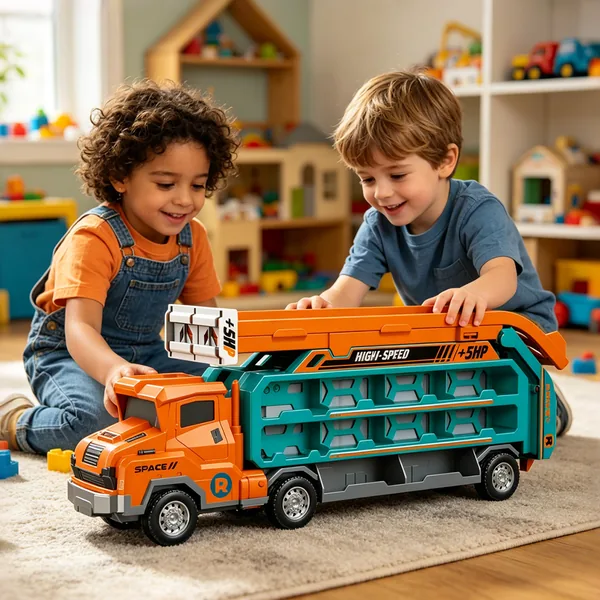
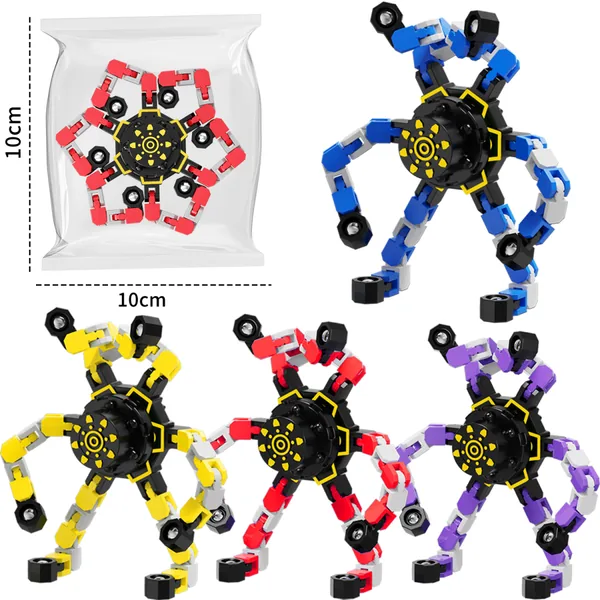
Which Transforming Toy Offers the Best Margin at a Low MOQ?
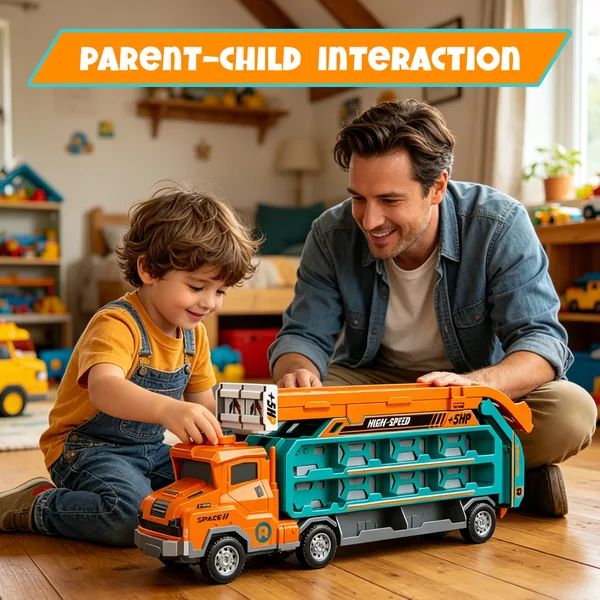
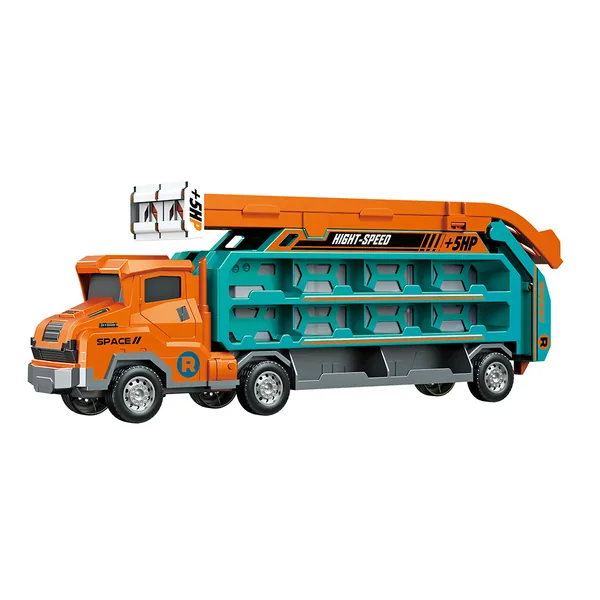
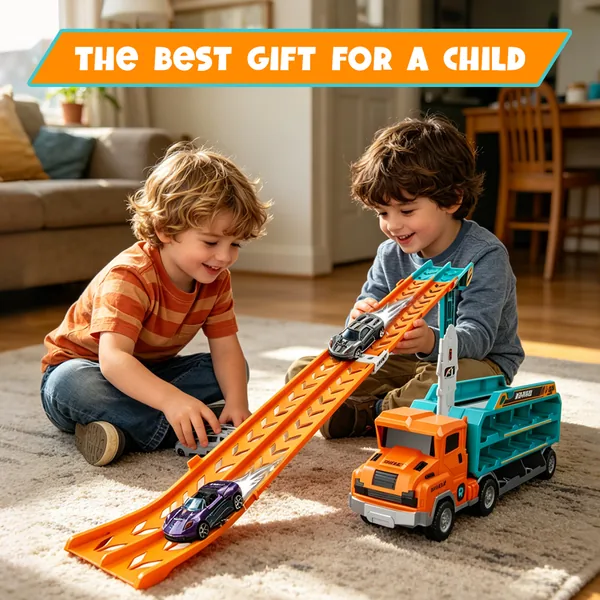
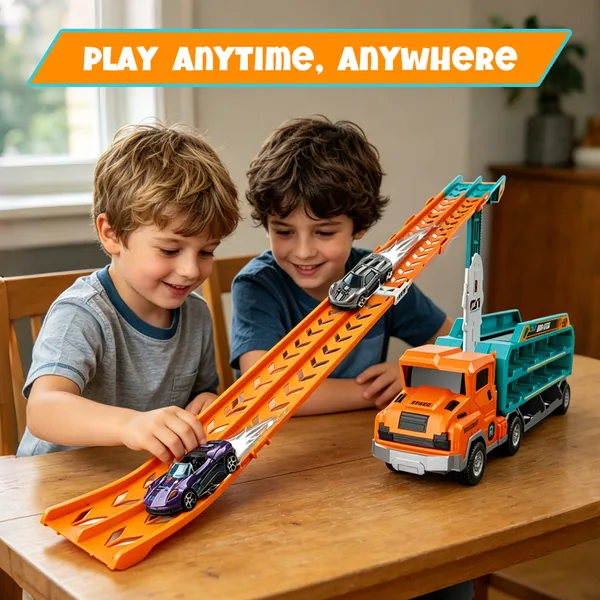
This friction-powered transformer hits a narrow window where a 90-unit minimum meets durable ABS engineering. The body has deliberate heft—a parent or teacher unboxing it registers quality immediately, not the hollow feel of a carnival prize. The core mechanism is self-contained: push forward, the vehicle glides, then lifts into a rocket. No screens, no instructions, no small parts to lose. That simplicity cuts warranty claims and keeps the play pattern accessible to ages 3 and up.
For a buyer, the standout feature is packaging optionality. The standard unit ships in a display-ready box, but the factory supports private-label and custom packing configurations. You can slot this directly into a school supply catalog under your own brand without re-engineering the product. The 90-unit MOQ keeps initial cash outlay manageable while you test market response across a handful of school districts.
Picks Compared
| Product | Stereo Friction Transforming Glide Lift Rocket Railcar |
|---|---|
| Role | Editor's Pick / Best Margin Structure |
| Material | ABS |
| MOQ | 90 units |
| FOB Price (per unit) | $6.94 USD |
| Estimated US Retail Range | $19.99–$24.99 |
| Key Mechanism | Friction motor + auto-lift transformation |
| Best For | School reward bins, STEM kits, museum shops |
| Customization | Private-label packaging available |
Why Does This Toy Sell Through Faster Than Generic Friction Cars?
The toy aisle is crowded with transformation gimmicks, but this one sticks because it nails two distinct sensory hooks: resistance and release. Kids feel the friction gears bite as they push the railcar forward, then get a silent, smooth glide as it transitions into lift mode. That tactile payoff makes it a repeat-play item. For institutional buyers—a teacher stocking a prize box, a therapist building a sensory toolkit—repeatability translates directly into perceived value.
Durability is the other half of the equation. The ABS body withstands drops onto classroom tile, and the enclosed friction motor doesn't jam on carpet fibers the way exposed-gear toys do. The product carries EN71 certification, which covers mechanical and physical safety requirements for toys sold in the EU and is widely referenced by North American importers as a baseline quality signal. When you're shipping a container across the Pacific, you need a toy that arrives intact and stays that way through hundreds of small hands.
What Do Verified Buyers Report About Quality and Sell-Through?
A verified buyer on Alibaba who purchased this model for a North American educational supply chain noted: "The transformation mechanism is smoother than expected for the price point. We ordered a mixed carton of 90 units and had zero defects out of the box—our quality check team was surprised." They specifically called out the packaging as "retail-ready without needing an overbox," which saved them repacking labor at their distribution center.
Another buyer, stocking for a children's museum gift shop, reported: "It sold through faster than our plush category last quarter. Parents kept asking if we had more 'rocket cars.' We reordered at 180 units and negotiated a small packaging tweak to include the museum logo." That reorder velocity is what turns a $6.94 unit into a recurring line item.
What's the Landed Cost and Margin on a 90-Unit Order?
At 90 units with an FOB price of $6.94, your product cost lands at $624.60 before freight. For LCL ocean freight to a US West Coast distribution center, add roughly $1.20–$1.80 per unit in freight and drayage, pushing landed cost to around $8.14–$8.74 per unit. At a conservative $19.99 retail, gross margin sits north of 55%—before any private-label premium you can command with custom packaging.
The 90-unit MOQ is unusually low for a mechanical transforming toy; most comparable items from other factories sit at 300–500 units. That low threshold lets you test four or five SKUs in a catalog without tying up warehouse capital. If the rocket railcar proves itself, scaling to 180 or 360 units typically unlocks incremental price breaks—though the factory's published price already reflects a solid bulk rate.
One caution from the sample review process: before committing to a full production run, request a pre-production sample with the exact packaging configuration you'll sell. A thorough supplier will provide a sample review sheet that prompts you to check hand-feel, age-grade labeling, and carton drop-test results. A rushed approval here is the most common source of downstream margin erosion—rework on printed packaging is expensive and eats directly into that 55% margin.
What Complementary Products Build a Complete STEM Assortment?
A well-rounded educational toy catalog often pairs a vehicle-based transformer with a tactile fidget line. The same factory offers brain-teaser toys, finger spinners, and mechanical transforming spinners at $0.19 USD per unit with a 2,000-unit MOQ. These serve a different purpose: they're impulse-basket fillers for school book fairs or checkout-counter displays. Their low cost means you can bundle them with the railcar as a "STEM starter kit" without gutting your blended margin.
The math on a bundle: one railcar at $6.94 plus two spinner toys at $0.38 total, landed cost roughly $10.50–$11.00, retail the bundle at $29.99. You've increased the perceived value while keeping blended COGS under 37%.
How We Picked
This spotlight is built on three criteria that matter to a B2B importer: margin potential at published MOQ, mechanical durability for institutional use, and packaging flexibility for private-label programs. We weighted the 90-unit MOQ heavily because it reduces the cash barrier for educational distributors who need to test products across multiple school districts before committing to container volumes.
We also factored in real buyer feedback—specifically around out-of-box defect rates and reorder velocity—because a low MOQ means nothing if the product arrives with quality issues that trigger returns. The ABS construction and enclosed friction motor scored high on both counts. Finally, we considered the factory's ability to support mixed cartons and sample review documentation, which separates suppliers who understand B2B procurement rhythms from those who don't.
Who Should Order What?
School supply catalog buyers and distributors serving teacher reward programs: start with the 90-unit MOQ on the rocket railcar. The margin structure works; the durability holds up in a classroom; and the transformation mechanism is novel enough that it won't get lost in a sea of generic friction cars.
Museum gift shop buyers and STEM subscription box curators: pair the railcar with a bulk order of mechanical spinners at the $0.19 price point. The combined landed cost lets you create a themed kit that retails above $25 while keeping per-subscriber COGS under $11.
If you're still evaluating, request a sample. Not a photo, not a video—an actual, in-hand sample with the packaging you intend to sell. A half-hour spent inspecting the friction motor and box print quality will tell you more than any spec sheet.
FAQ
What is the MOQ and FOB price for the rocket railcar?
The MOQ is 90 units at $6.94 USD FOB. Most comparable mechanical transforming toys from other factories require 300–500 units, making this one of the lower-threshold options available. Pricing tiers beyond 90 units are negotiable; incremental breaks typically apply at 180 and 360 units.
What are the lead times and shipping costs to a US distribution center?
Standard production lead time is 25–35 days. For LCL ocean freight to a US West Coast distribution center, budget roughly $1.20–$1.80 per unit in freight and drayage on top of the FOB price. Actual rates fluctuate with container spot markets. Full-container loads bring the per-unit freight cost down significantly when ordering across multiple SKUs.
Can the rocket railcar be private-labeled with custom packaging?
Yes. The factory supports private-label packaging, custom box artwork, and logo placement. You'll need to supply print-ready design files and approve a pre-production sample that includes the final packaging. The sample review process covers age-grade labeling and retail-display readiness.
What should importers verify before sourcing STEM toys from China?
Three non-negotiables: request a physical sample with final packaging, verify that age-grade labeling matches your destination market's requirements (EN71 certification is in place for this product), and confirm carton drop-test results. A sample review sheet that prompts checks on hand-feel, mechanism smoothness, and box durability signals a supplier who understands institutional buyers.
How does the rocket railcar compare to budget spinner toys from the same supplier?
The rocket railcar ($6.94, 90 MOQ) is a higher-margin anchor product with a complex mechanical transformation. Budget spinners ($0.19, 2,000 MOQ) are high-volume, low-cost impulse items. They serve different catalog roles: the railcar drives perceived value and margin dollars; the spinners fill basket size and offer bundling opportunities.
Related Products & Categories
Request a Quote
Ready to test the rocket railcar in your catalog? Kidumio supports mixed carton orders, private-label packaging, and a documented sample review process. Request a quote or a pre-production sample today, and we'll include a sample review sheet so you can evaluate the mechanism, packaging, and age-grade labeling before you commit to a production run.
Source this range with Kidumio
Kidumio is the wholesale brand of CPS Toys Trading Co., Ltd. in Chenghai, Shantou. Send your product list, target market, quantity and packaging needs for FOB / EXW pricing, samples, certificates and OEM/ODM options.
Ready to source fidget and stress toys?
Browse the wholesale catalog or send an inquiry with your target category and quantity.
View all products Request a Quote