
Reviews · Jul 30, 2026
Push-to-Go Animal Cars: A Buyer’s Guide to MOQ, Margin & Why It Sells in 2026
A contrarian B2B buyer’s guide to wholesale Push-to-go Animal Cars: why ABS beats wood, MOQs from 180 pcs, real margin logic, and why this SKU earns its shelf space.
In short: A contrarian B2B buyer’s guide to wholesale Push-to-go Animal Cars: why ABS beats wood, MOQs from 180 pcs, real margin logic, and why this SKU earns its shelf space.
The Push-to-go Animal Car is a friction-powered, palm-sized vehicle that lights up when pressed—no batteries, no instructions, and a near-zero after-sale defect rate. That mechanical simplicity is why distributors build reorder programs around this SKU while motorized toys generate return headaches. This guide breaks down the real MOQ, margin structure, material choices, and sourcing mistakes that erode profit on what looks like a simple commodity. If you’re stocking for North American classroom rewards, sensory corners, or impulse-buy endcaps, the cheapest unit price is rarely the best deal.
Key Takeaways
- Best overall for bulk classroom stock: Kidumio’s Push-to-go Animal Car (ABS, friction-powered, lights on press) — MOQ 180 pcs at 4.04 USD, built for repeat institutional purchasing with clear carton specs and compliance support.
- Best margin for premium sensory lines: Skip the wooden versions (splinter risk, higher defect rate) and lead with ABS. The material’s durability cuts after-sale complaints, protecting margin over a full school-year reorder cycle.
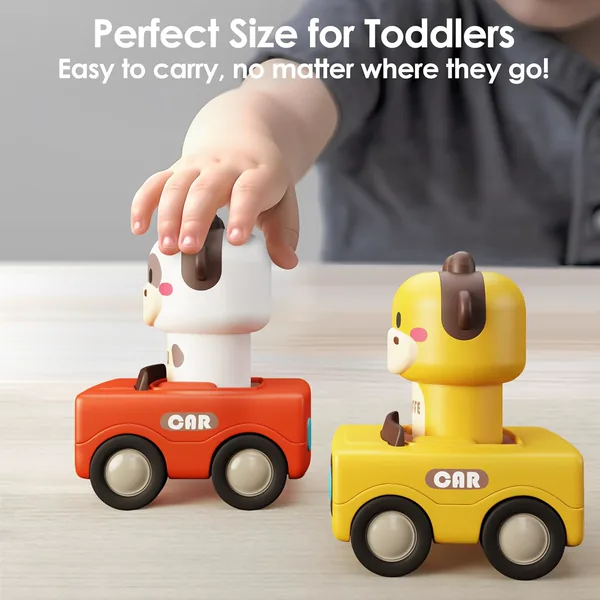
- Best for younger toddlers (18m+): The Push-to-go Animal Car’s simple cause-effect action and no removable parts make it the safer choice for daycare and early intervention settings versus magnetic or building sets.
- Common mistake: Ordering by container without checking carton weight and inner box count first. A lightweight master carton can slash LTL and FBA inbound costs; ask for a sample box, not just a sample unit.
What Is a Push-to-go Animal Car & Why Does It Move?
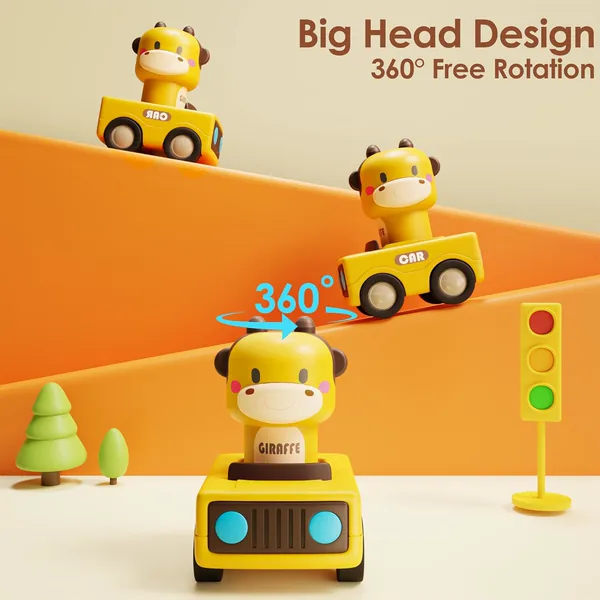
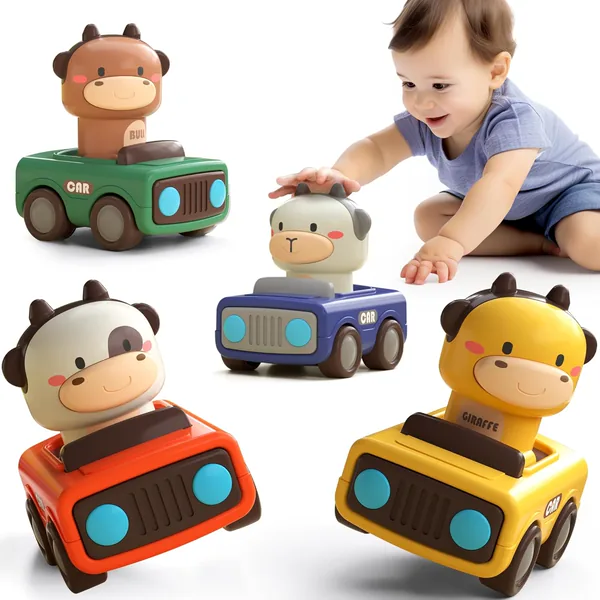
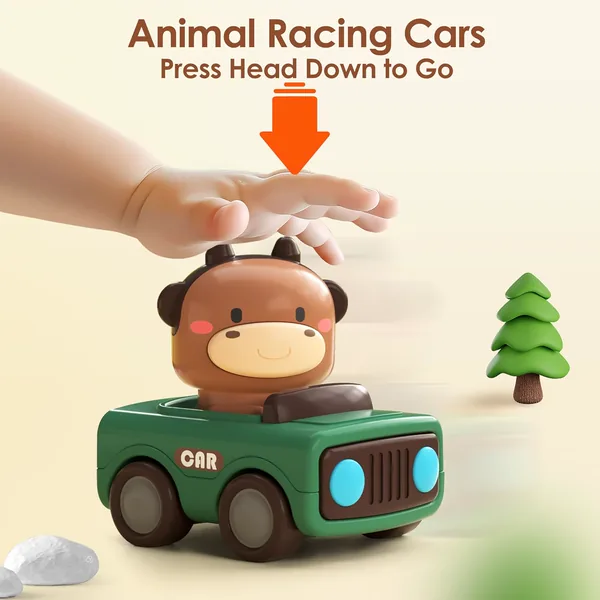
A push-to-go animal car is a small, usually palm-sized vehicle shaped like a friendly animal (bear, cat, dog, dinosaur) with a simple internal spring-and-gear mechanism. A child presses down on the animal’s back or head, and when they release, the car zips forward across a smooth floor. The action is purely mechanical: no batteries, no remote, no charging. Inside, a coiled spring engages a gear train that transfers stored energy to the rear wheels. That sound you hear isn’t a speaker—it’s the satisfying whir of gears spinning down.
The version Kidumio carries adds a small LED that flashes during movement, triggered by the same kinetic energy. This is a critical detail for buyers in early education and sensory channels: the light provides a visual tracking target that occupational therapists and preschool teachers use for eye-hand coordination exercises. It’s a 4-dollar product doing work that motorized toys at triple the price often fail at, because those introduce screen pairing, battery failure, and return headaches.
For a wholesale buyer, the mechanical simplicity means a near-zero after-sale defect rate compared to electronic toys. The failure points are minimal: a spring that rarely fatigues, injection-molded ABS gears that don’t strip, and wheels that snap onto axles. You’re not fielding angry emails about dead batteries or Bluetooth pairing failures. That’s the quiet profit story behind this SKU.
Types of Push-and-Go Vehicles & What Actually Matters When Buying
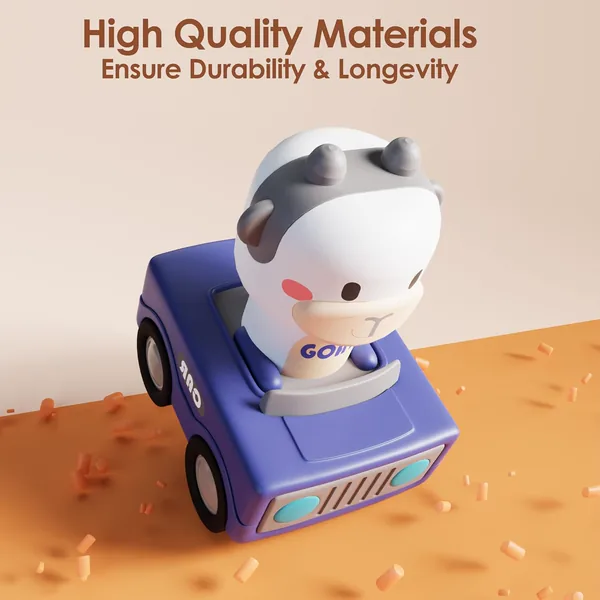
Push-and-go toys split into two broad material camps: ABS plastic and wood. ABS dominates the wholesale educational channel for two reasons that show up on a balance sheet, not in a catalog photo. First, ABS survives sanitizing wipes and daycare bleach solutions without degrading—wood absorbs moisture, swells, and eventually fails the same safety inspection that passed it six months earlier. Second, ABS injection molding produces consistent friction fits; wooden pegs and axles vary with humidity and grain, leading to wheels that stick or fall off. When you’re selling into a school district with a 12-month reorder cycle, consistency matters more than aesthetics.
Within ABS push-to-go cars, differentiation comes from the trigger mechanism and the character design. Some use a side-button, others a top-press. The top-press design is preferred in special-needs and early-intervention settings because it requires a gross motor push rather than a fine-motor pinch—more accessible for children with motor delays. The animal shape itself isn’t just decoration; a recognizable, friendly face reduces hesitation in children with sensory sensitivities, making it a more effective engagement tool.
A third, less common category is the die-cast push-and-go, typically heavier and aimed at collectors or older children. For wholesale buyers targeting ages 18 months to 4 years, ABS is the practical default. The weight difference alone changes shipping economics: a 40’ container of ABS push-to-go cars holds significantly more units than die-cast equivalents, lowering the landed cost per piece.
Top Picks Compared at a Glance
| Product | Push-to-go Animal Car |
|---|---|
| Price (MOQ) | 4.04 USD (180 pcs) |
| Material | ABS |
| Age / Use | 18m+ / sensory, classroom reward, impulse |
| Best For | High-volume institutional reorders |
Top Pick Review: Kidumio Push-to-go Animal Car (#1 Pick for Institutional Buyers)
This is the SKU you lead with when a school district buyer opens a sourcing call. At 4.04 USD with an MOQ of 180 pieces, the Push-to-go Animal Car sits in a pricing sweet spot where the per-unit cost is low enough for classroom reward budgets, but the ABS build quality prevents the product from being perceived as disposable junk. When a teacher hands this to a two-year-old and it survives the week, they reorder. That’s the metric that matters.
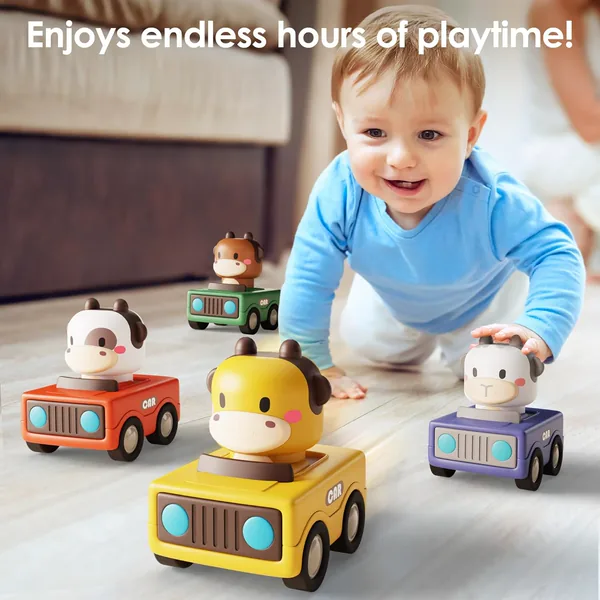
The product page at /products/cps342098 shows a colorful, rounded animal form with no sharp edges, no removable wheels, and a top-press activation that doesn’t require finger strength. For distributors serving early intervention programs, this accessibility detail can be the difference between a catalog placement and a pass. The integrated LED flashes during motion, giving visual feedback that keeps a child engaged across repeated plays—this matters for sensory-seeking behaviors where a toy that stops being interesting after two minutes gets discarded.
From a sourcing standpoint, Kidumio ships this in cartons with clear inner box counts and known gross weight, which means your logistics team can calculate landed cost without guesswork. The MOQ of 180 is deliberately low for a first trial order; it’s enough to fill a shelf or a small distribution run without committing to a full pallet. If you’re testing a new channel—say, therapy clinics or museum gift shops—this MOQ makes the experiment cheap.
Pros: ABS material tolerates sanitizing protocols without degrading; no batteries eliminates the most common return reason for powered toys; consistent carton specs simplify reorder forecasting; accessible top-press mechanism works for children with motor delays; integrated light extends engagement time.
Cons: Single action (push-and-go) limits play variety for older children; price point is higher than ultra-budget polypropylene knockoffs that may appeal to dollar-store channels; requires a smooth floor surface for optimal performance—carpeted classrooms reduce travel distance.
What Should Importers Check Before Sourcing Push-to-go Toys from China?
The compliance checklist for a friction-powered toy is short compared to electronics, but skipping any item can burn a container’s worth of margin. First, confirm the supplier’s EN71 certification is current and covers the specific SKU you’re ordering, not just the factory’s general certificate. According to the standard, a factory holding EN71 for plush doesn’t mean their ABS cars are covered. Kidumio holds EN71 for its educational toy catalog, so you’re not running a separate lab test for a 4-dollar item.
Second, request a sample review sheet—not just a sample. The best practice is to ship samples with a structured review form covering hand-feel, packaging durability, age-grade clarity, and channel fit. This forces your merchandising team to evaluate the product against real shelf conditions, not just a desk check. If a supplier can’t provide this, they’re likely not thinking about your downstream buyer.
Third, check the inner box count and master carton dimensions before calculating freight. A carton that fits neatly on a standard 48x40 pallet with no overhang saves pallet fees and reduces damage in transit. Lightweight ABS cars cube out before they weigh out, so optimizing carton dimensions can shave 8-12% off your LTL rate. Ask for a carton spec sheet, not just a unit sample.
FAQ: Push-to-go Animal Car Wholesale
What minimum order quantities and pricing tiers do suppliers typically require for push-to-go animal cars?
MOQs for ABS push-to-go cars typically range from 180 to 600 pcs depending on whether the product is a stock SKU or a custom run. Kidumio’s Push-to-go Animal Car starts at 180 pcs at 4.04 USD, which is low enough for a channel test while still providing a wholesale margin. Larger volumes (5000+ pcs) often unlock tiered pricing and custom packaging options.
What are the typical lead times and shipping costs for bulk push-to-go toys from Asia to a US distribution center?
Lead time for a standard order is 25-35 days from order confirmation to ex-factory. Shipping mode dictates cost: sea freight for a full pallet of lightweight ABS cars is the economical default, while air freight makes sense only for urgent small restocks. Carton weight and cube are the real cost drivers; ABS cars are light, so you’re usually paying by volume, not weight.
Can push-to-go animal cars be customized with our brand or packaging?
Yes. Suppliers like Kidumio support OEM packaging and private labeling, including custom color boxes, hang tags, and barcode placement. You’ll typically need to provide vector artwork (AI or PDF) for print plates. MOQs for custom packaging may be higher than the base product MOQ—confirm during quoting. The standard packaging is already retail-ready, so small buyers can launch without custom tooling costs.
Why choose ABS over wooden push-to-go cars for educational channels?
ABS withstands frequent sanitizing, doesn’t splinter, and maintains consistent mechanical action across production batches. Wood absorbs moisture and can warp, leading to inconsistent friction fits and potential safety non-compliance over time. For institutional buyers who expect a toy to last an entire school year under heavy use, ABS is the lower-risk material choice.
How do I compare reliable suppliers for friction-powered educational toys?
Look past the unit price. Compare carton configurations (inner box counts, gross weight), lead time consistency, certification currency (EN71 matched to the exact SKU), and whether the supplier provides a sample review sheet. A supplier who can give you a structured evaluation form before you place an order is thinking about your downstream customer, not just their own production line.
Related Products & Categories
Request a Quote: Push-to-go Animal Car Wholesale
If you’re sourcing for classroom rewards, sensory play kits, or impulse-buy retail displays, start with a sample and a carton spec. Kidumio ships the Push-to-go Animal Car at MOQ 180 with clear carton data, EN71 compliance, and OEM packaging options. Send us your target channel and volume, and we’ll return a landed-cost estimate, lead time, and sample review sheet within one business day.
Source this range with Kidumio
Kidumio is the wholesale brand of CPS Toys Trading Co., Ltd. in Chenghai, Shantou. Send your product list, target market, quantity and packaging needs for FOB / EXW pricing, samples, certificates and OEM/ODM options.
Ready to source fidget and stress toys?
Browse the wholesale catalog or send an inquiry with your target category and quantity.
View all products Request a Quote