
Supplier · Jul 13, 2026
Verify EN71/ASTM for Electronic Educational Toys (2026 Guide)
Go beyond paper certificates. Learn factory audit checkpoints for battery-operated educational toys—EN71, ASTM F963, EMC, chemical safety—with real cost/MOQ trade-offs.
In short: Go beyond paper certificates. Learn factory audit checkpoints for battery-operated educational toys—EN71, ASTM F963, EMC, chemical safety—with real cost/MOQ trade-offs.
A paper certificate is cheap; a failed shipment to Amazon or EU customs is expensive. For wholesale electronic educational toys—flash card readers that chirp, musical dinosaurs that roar, walkie-talkies with exposed battery compartments—EN71 and ASTM F963 compliance is a mechanical, chemical, and electrical audit that most factories in Chenghai will promise but few will let you physically verify. This guide covers the specific test points that matter for battery-operated learning toys, the cost/MOQ trade-offs between full-compliance production and standard-line runs, and the on-site audit checklist you need before paying a deposit.
Key Takeaways
- Paper certs are the floor, not the ceiling: Ask for the full test report (not just the certificate), and cross-check the report's batch number with the physical product's marking.
- Electronics double the compliance cost: Expect to pay 10–15% more per unit for a fully EN62115/EMC-tested electronic toy versus a passive plastic toy. This directly hits margin on low-MOQ trial orders.
- MOQ dictates your testing leverage: Below 3,000 units, you'll likely take existing stock with existing certs. Above 5,000 units, you gain leverage to demand fresh batch testing and custom material substitutions.
- Battery compartments are the #1 audit failure: Screw-secured lids that strip, Ni-Cd batteries shipped inside the toy (a CPSIA violation), and wiring that can be hooked by a child's finger. This is where most cheap electronic toys fail.
Market Overview: The Real Cost of Compliance in Chenghai
Shantou's Chenghai district produces over 70% of China's plastic toys, and electronic educational toys are one of its fastest-growing segments. In the showrooms around the Chenghai Toy Distribution Center on Wenming Road, you'll find walls of talking flashcards, interactive globes, and dancing robots—all priced at a fraction of what an OEM in Dongguan or Shenzhen would quote. The trade-off is compliance rigor. Most small-to-mid factories here operate on an "order-first, test-later" model: they'll quote a rock-bottom EXW price for an existing SKU, then run EN71 or ASTM tests only after you place a deposit. That's not fraud; it's the economic reality of a factory running on 8–12% net margins. The buyer who understands this dynamic—and budgets for pre-shipment batch testing—wins. The buyer who trusts a laminated certificate on the wall loses.
Unlike Yiwu, which trades mostly in finished generic goods, Chenghai factories typically hold the molds and can modify materials, circuitry, and packaging at the production level. This means you can negotiate for specific compliance upgrades—switching from ABS to wheat-straw composite, upgrading a battery compartment from a snap-fit to a screw-secured lid, adding a ferrite bead to suppress EMC noise—if your order volume justifies the retooling cost. That retooling cost is the central number you're negotiating: sometimes as low as 200–500 USD for a simple mold modification, or as high as 3,000 USD for a full enclosure redesign.
The biggest margin killer in electronic educational toys isn't the BOM cost—it's the rework when a batch fails the drop test or the small-parts cylinder. A factory that runs pre-production compliance checks and maintains in-house pull-test and drop-test rigs will catch these failures before the production line starts, not after 5,000 units are packed and palletized.
Key Test Areas for Battery-Operated Educational Toys
A plastic stacking toy faces EN71 Part 1 (mechanical/physical), Part 2 (flammability), and Part 3 (migration of certain elements). An electronic educational toy adds EN62115 (electric toy safety) and, for the EU market, EMC (electromagnetic compatibility) and RoHS/REACH for the PCB and wiring. For the US, ASTM F963 incorporates similar electrical sections (section 4.25 for battery-operated toys). The following are the specific checkpoints that separate a compliant educational toy from a recall waiting to happen—and what you should physically inspect during a factory audit.
Compliance Cost vs. MOQ Trade-Offs: Electronic Educational Toys
| Compliance Level | Existing stock with existing certs |
|---|---|
| Typical MOQ | 36–240 units (standard Chenghai factory MOQ) |
| Unit Cost Impact | Baseline (1.05–4.74 USD EXW for small electronics) |
| Testing Freshness | Cert may be 12–24 months old; batch number likely doesn't match your production run |
| Your Risk | Medium. Acceptable for low-stakes market testing; dangerous for Amazon FBA or EU big-box retail. |
| Factory's Margin on This | 8–12%. They're making money on volume, not on compliance. |
| Compliance Level | Fresh batch testing on your production run |
|---|---|
| Typical MOQ | 3,000–5,000+ units (negotiable for a surcharge on smaller runs) |
| Unit Cost Impact | +10–15%. Covers SGS/BV/ITS lab fees (EN71-1/2/3: ~800–1,200 USD; EN62115: ~1,500–2,500 USD) amortized over the run. |
| Testing Freshness | Test report issued for your specific batch; report number matches your QC checklist. |
| Your Risk | Low. You own a defensible compliance dossier. |
| Factory's Margin on This | 10–15%. They're factoring in rework risk and lab coordination time. |
| Compliance Level | Full custom OEM with material substitution (wheat-straw or food-grade silicone) |
|---|---|
| Typical MOQ | 5,000–10,000+ units |
| Unit Cost Impact | +20–30%. New mold trial, material certification, EMC pre-compliance scan, and full EN71/ASTM suite. |
| Testing Freshness | Brand-new test reports tied to your custom SKU. |
| Your Risk | Lowest. You've designed compliance in from the start. |
| Factory's Margin on This | 15–20%. The factory is building a long-term OEM partnership and amortizing engineering overhead. |
Factory Audit Checklist: What to Physically Check for Electronic Toys
A third-party lab report is evidence, not a guarantee. During a factory visit—or through a hired inspector—you need to verify that the production line matches what was tested. Here are the specific checkpoints for electronic educational toys that cause the most customs rejections and marketplace de-listings.
Battery Compartment and Wiring
| Screw-secured vs. snap-fit lids | ASTM F963 and EN71 require tool-accessible battery compartments for toys intended for children under 3 (or if batteries are small parts). A snap-fit lid on a musical dinosaur for a 2-year-old is an automatic fail. Physically test the screw torque—stripped screw bosses are a common injection-molding defect. |
|---|---|
| Battery polarity and short-circuit protection | Check that the compartment design prevents a child from bridging terminals with a metal object. A simple plastic barrier costs fractions of a cent. |
| Wiring gauge and strain relief | Pull-test the wires connecting the battery terminals to the PCB. If they detach with a firm tug, the speaker or motor wiring can become a strangulation or electrical shock hazard. According to EN62115, internal wiring must withstand a 25N pull test. |
| No batteries shipped inside the toy | CPSIA and the EU Battery Directive prohibit shipping Ni-Cd or alkaline batteries installed in the toy unless the compartment is doubly secured. Most Chenghai factories know this but exceptions still appear in rush orders. Check. |
EMC (Electromagnetic Compatibility) and PCB Quality
| Ferrite bead or choke on speaker/motor leads | A cheap electronic toy without EMC suppression can interfere with nearby devices (a CE/RED requirement). Check for a small cylindrical bead on the wiring—its absence suggests the PCB was never EMC-tested. |
|---|---|
| PCB solder joint quality | Look for cold solder joints (dull, cracked) under magnification. A musical flash card reader that works on day one and dies on day 30 is a return-rate disaster. This is not an EN71 failure, but it's a quality failure that kills your margins. |
| Conformal coating | Not required for dry-use toys, but if the educational toy involves water (a "magic water elf" kit), the PCB should have a thin protective coating to prevent corrosion. |
Chemical Safety: Plastic and Wheat-Straw Materials
| Phthalate and heavy metal migration | EN71 Part 3 and ASTM F963 soluble heavy metals tests are standard. But for "eco-friendly" wheat-straw or PLA composites, demand a specific migration test on the composite, not just the base ABS. Some wheat-straw blends use formaldehyde-based binders that can leach. Ask for the REACH SVHC screening if the material claim matters to your brand. |
|---|---|
| Odor test | A sharp chemical smell from a new electronic toy is a red flag for volatile organic compounds (VOCs). This is subjective but critical—a toy that off-gasses in retail packaging will generate returns. Open a sealed polybag in the factory and smell it. |
| Small parts after drop test | Electronic toys with LEDs, buttons, and magnetic connectors must survive the EN71/ASTM drop and torque/tension tests without releasing small parts. The flash card reader's buttons, the walkie-talkie's antenna—these are common failure points. Ask to see the drop-test video or witness a sample test on the spot. |
How to Verify a Certificate Is Real (and Yours)
Importers routinely accept a PDF titled "EN71 Test Report" without checking three things that would have saved them a container seizure. First, the report number: every genuine SGS, BV, or ITS report has a unique identifier. Call the lab or use their online verification portal. Second, the applicant name: if the certificate was issued to a trading company that isn't your supplier, it's not valid for your shipment. Third, the photo and description: the report should show a photo of the exact toy, including the battery compartment and any electronic features. A report for a generic plastic rattle doesn't cover a talking flash card reader.
The standard any prospective supplier should meet: produce the full test report—not just the summary certificate—within 24 hours of your request. If they can't, walk away. The report costs them nothing to email; if they stall, the report either doesn't exist or doesn't belong to them. A supplier who can produce a BSCI audit report, the complete EN71-1/2/3 dossier, and a physical sample with destination-market packaging on the spot is operating at the compliance level you need.
For battery-operated educational toys specifically, demand the EN62115 or ASTM F963 Section 4.25 report in addition to the EN71/ASTM mechanical and chemical sections. Many factories will show you a CE certificate that only covers the plastic enclosure, not the electronics inside. That gap is how non-compliant electronic toys reach Western markets.
Tips for Foreign Buyers: Cost, Margin, and Negotiation
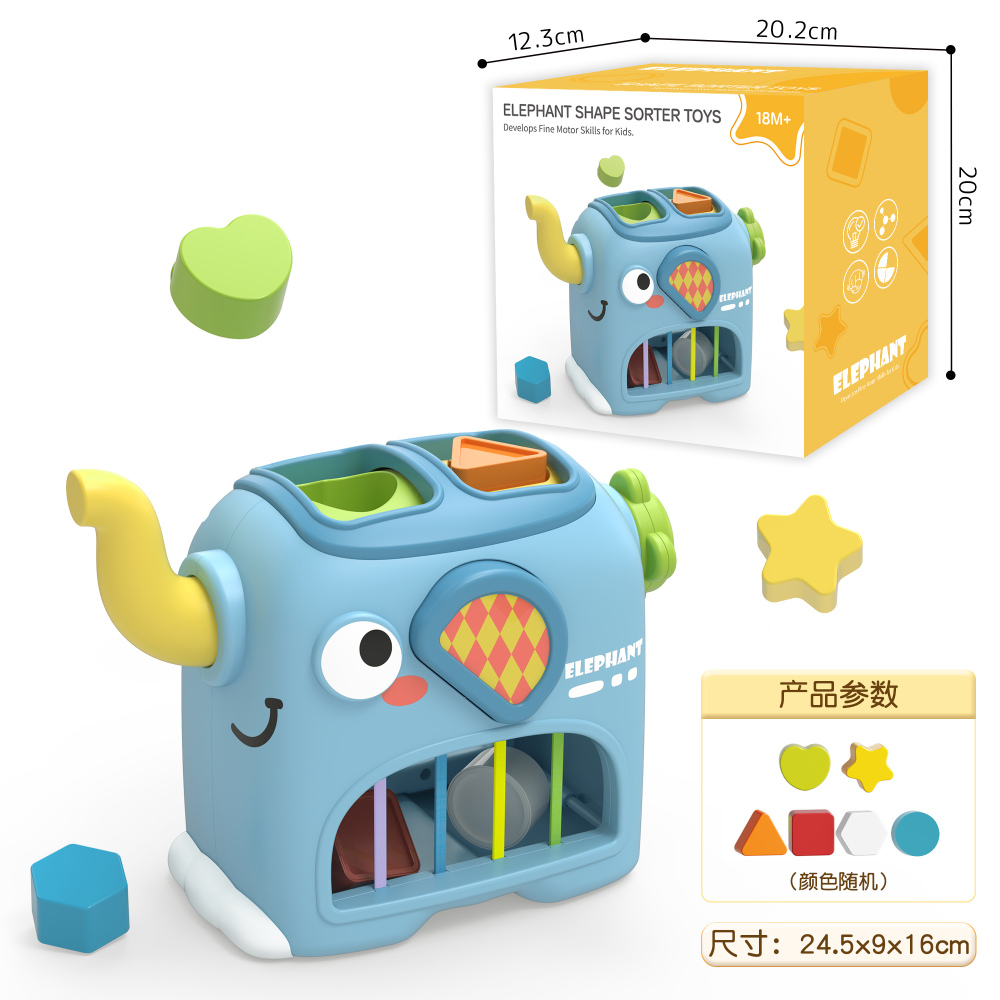
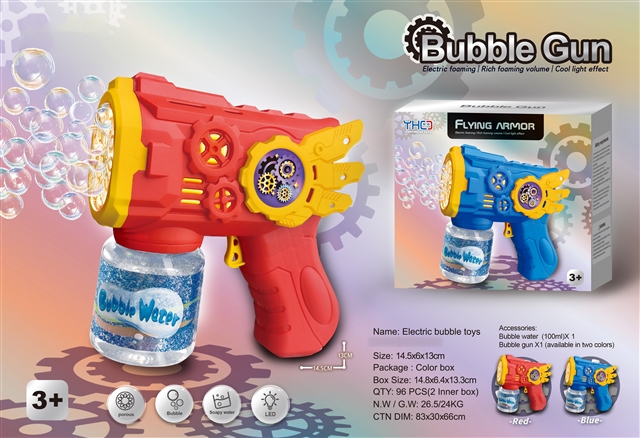
The unit price a Chenghai factory quotes for an electronic educational toy—say, 3.69 USD for an Educational Elephant Picture Matching Game or 1.05 USD for an Electric Bubble Gun—is an EXW price for the toy as-is, with whatever certifications the factory already holds. If you need fresh batch testing, custom packaging, or a material substitution, that price moves. Here's how to negotiate without burning the factory's margin so thin that they cut corners on safety.
Be precise in your initial RFQ: state the target market (EU/US/UKCA), the required certifications (list them: EN71-1/2/3, EN62115, CE-EMC, RoHS, REACH, ASTM F963, CPSIA), and whether you need the test report in your company's name. This signals you're a professional buyer and weeds out trading companies that can't control production. Most Chenghai sales teams use WeChat and email—use both to create a written record of every compliance promise.
Standard payment terms are 30% deposit, 70% before shipment. For a first order with fresh batch testing, negotiate to hold 10% of the balance until you receive the passed test reports. Include a clause in the PI that states: "All products must comply with [list standards] as evidenced by third-party test reports issued within 90 days of shipment, with report numbers provided to buyer." This is normal and any factory doing real compliance work will agree.
Never ship electronic toys without a pre-shipment inspection (PSI) that specifically checks the battery compartment, wiring, and drop-test results on your production samples. Hire an independent inspector (QIMA, AsiaInspection) if you can't be on-site. The cost—roughly 300–500 USD per man-day—is cheap insurance against a 15,000 USD container being seized at Long Beach or Rotterdam. Goods from Chenghai typically exit via Shantou Port or truck to Shenzhen Yantian. Factor in 3–5 days for inland transport and customs declaration.
The margin math: A compliant electronic educational toy that costs 3.18 USD EXW (like a motorized bubble machine with sound and light) will land in the US at roughly 4.50–5.00 USD after freight, duty, and inspection amortization. If your retail price is 19.99 USD, your gross margin is healthy. The danger is trying to squeeze the EXW to 2.50 USD—at that price, the factory is incentivized to skip the EMC test, use recycled ABS, or ship the batteries inside the toy. Don't negotiate against your own compliance.
FAQ
Can educational toy wholesale suppliers offer custom packaging and branding, and what file formats do they need?
Yes, most Chenghai factories provide custom packaging with MOQs starting around 1,000–3,000 units depending on print complexity. You'll typically need to supply AI or PDF files with die-cut lines and CMYK color specs. For electronic toys, the packaging must also include the correct warning labels (choking hazard, battery safety, age grading) per the target market's regulations. If a factory can't provide a packaging dieline, they're likely a trading company.
What should importers check before sourcing STEM toys wholesale from China?
First, verify that the supplier can provide the full electrical safety test report (EN62115 or ASTM F963 Section 4.25), not just the mechanical EN71/ASTM report. Second, request a physical sample and independently test the battery compartment, drop resistance, and small-parts release. Third, confirm the PCB has basic EMC suppression if the toy has a speaker or motor. For wheat-straw or eco-friendly materials, ask for a REACH SVHC screening on the composite.
How can buyers compare reliable suppliers for STEM toys wholesale?
Judge them on their response to a compliance request. A reliable supplier provides the full test report PDF within 24 hours, with a report number you can verify on the lab's website. They'll also explain which factory produced the tested sample and whether your production run will come from the same mold and material batch. A less reliable supplier stalls, sends a cropped certificate image, or claims the report is 'confidential.'
How long does it take to get fresh EN71 or ASTM testing on an electronic toy?
A standard EN71-1/2/3 test suite takes 1–3 weeks through SGS, BV, or ITS. Adding EN62115 for electronics extends it to 2–4 weeks. ASTM F963 with electrical sections is roughly 2–3 weeks. Rush service is available at a premium. Always factor this lead time into your production schedule—don't expect a factory to ship the same week you request fresh testing.
Related Products & Categories
Request a Compliance Quote for Your Electronic Educational Toy
You've now seen the audit checkpoints, the cost/MOQ trade-offs, and the documentation that separates a cert-on-the-wall factory from a genuine compliance partner. If you're sourcing electronic educational toys—flash cards, musical learning toys, walkie-talkies, or STEM kits—and need a supplier who can produce the full EN71/ASTM/EN62115 test dossier before your deposit clears, Kidumio is ready to quote. We'll send you a sample with the matching test reports, not a catalog photo. Ask for a factory audit; we'll walk you through the production floor and the battery-compartment mold yourself.
Source this range with Kidumio
Kidumio is the wholesale brand of CPS Toys Trading Co., Ltd. in Chenghai, Shantou. Send your product list, target market, quantity and packaging needs for FOB / EXW pricing, samples, certificates and OEM/ODM options.
Ready to source fidget and stress toys?
Browse the wholesale catalog or send an inquiry with your target category and quantity.
View all products Request a Quote