
EU GPSR 2026 Compliance: How Non-EU Toy Sellers Can Source Safe Products from China
EU GPSR 2026 is in force. Non-EU toy sellers must vet Chinese suppliers for authorized reps, technical files, and traceability. Learn the real compliance path.
The EU General Product Safety Regulation (GPSR) does not ban Chinese toys—it bans undocumented toys. A compliant product from Ningbo enters the EU just as legally as one from Bavaria, provided the paperwork is intact. What changed in 2026 is that every consumer product entering the EU now requires a named Authorized Representative, a complete technical file, and traceability data linking each SKU to a specific production batch. For toy importers, the sourcing conversation shifts from unit price to documentation integrity. The factories worth contracting are the ones that treat compliance as a core service, not an afterthought. This guide covers how to find, vet, and contract Chinese toy suppliers who deliver GPSR-ready products—including the exact documents to demand, the red flags that signal a factory bluffing on compliance, and which supplier categories actually work for EU-bound shipments.
Key Takeaways
- The GPSR does not ban Chinese toys—it bans undocumented toys. A compliant product from Ningbo or Shantou enters the EU just as legally as one from Bavaria, provided the documentation chain is unbroken.
- An EU Authorized Representative is mandatory and non-negotiable. If your factory cannot name theirs—or offers to provide one only after the order ships—walk away.
- Technical files must exist before the first unit leaves the factory gate, not assembled retroactively. Suppliers who say 'we'll prepare it during shipping' are creating a liability time bomb.
- MOQs for fully GPSR-compliant toys skew higher (typically 1,000–3,000 units) because the upfront compliance investment must be amortized. Mixed carton pilots with shared documentation are the practical shortcut for smaller buyers.
- Traceability labeling (batch code, manufacturer address inside the EU, importer name) must be physically printed on the product or its packaging—stickers applied in an EU 3PL warehouse do not satisfy the regulation.
Supplier Types for GPSR-Compliant Toy Sourcing from China
| Full-Compliance Export Factory | EN71/ASTM/GPSR-ready toys with in-house document coordination |
|---|---|
| OEM/Private-Label Specialist | Custom designs with compliance built into product development phase |
| High-Volume Commodity Factory | Basic plastic/diecast toys; compliance documentation available but buyer-driven |
| Trading Company / Consolidator | Mixed-category sourcing; can coordinate documents but rarely owns the technical file |
1. Full-Compliance Export Factory
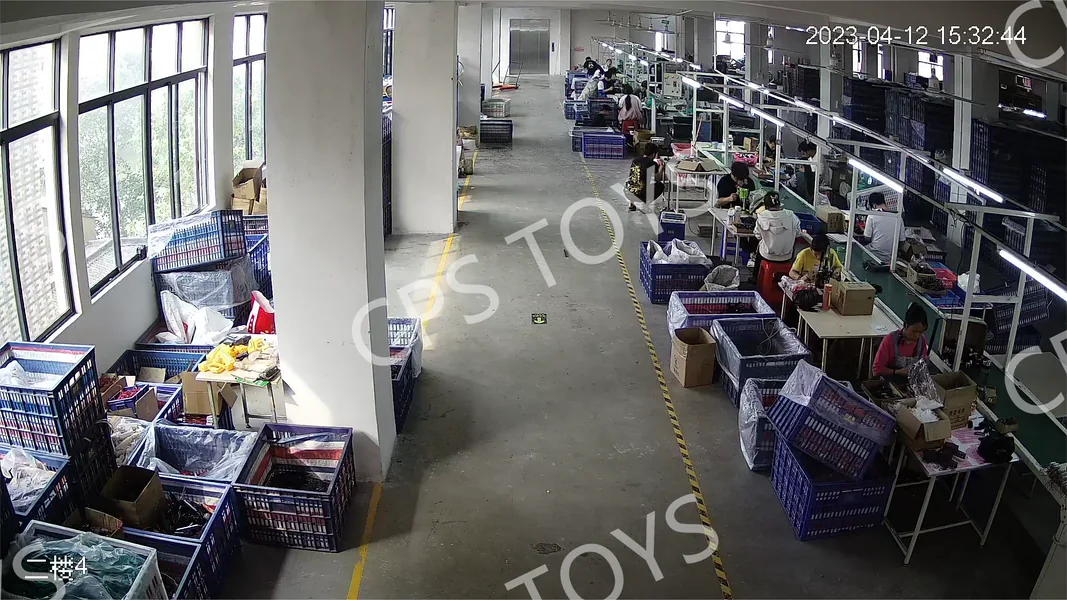
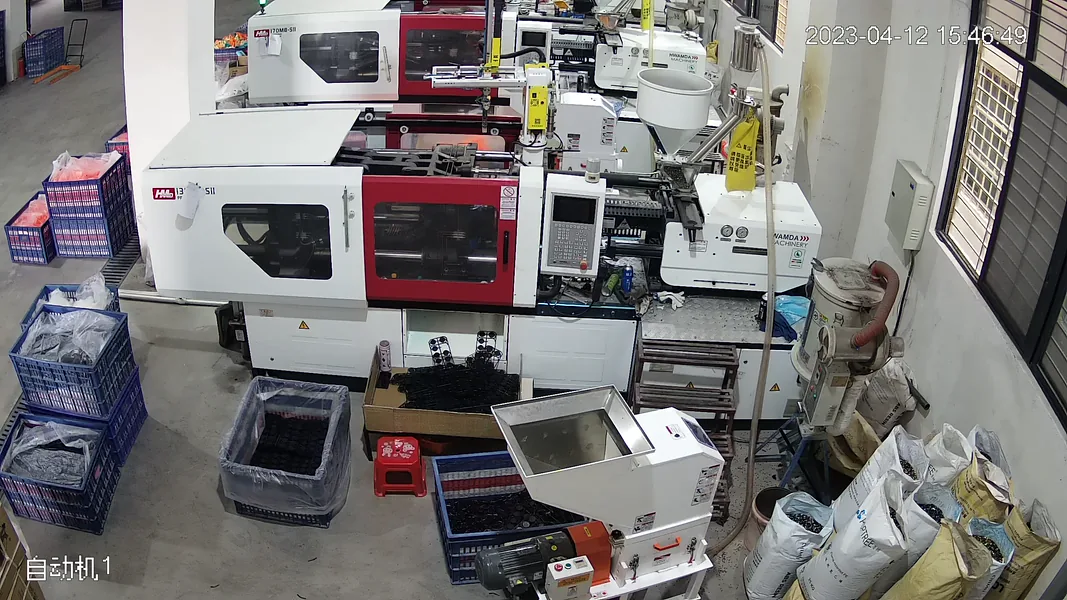
These manufacturers employ a dedicated compliance officer—not a salesperson who forwards PDFs—and maintain living technical files for every active SKU. Expect them to proactively offer a Declaration of Conformity, test reports from an EU-notified body, and the contact details of their EU Authorized Representative during the sampling phase, not as a closing concession. Their MOQs reflect the compliance investment: 1,000 to 3,000 units per SKU is common, with FOB pricing roughly 8–15% above a non-compliant equivalent. These factories cluster around Ningbo (wooden/educational toys) and select Shantou operations that have pivoted away from pure price competition.
How to separate a legitimate full-compliance factory from one that bought test reports for a single sample: ask to see the technical file for a SKU you did not request. A factory with genuine compliance infrastructure can retrieve it within hours. One that only tested the hero product will stall.
2. OEM/Private-Label Specialist
For importers who need custom packaging, exclusive designs, or brand-specific educational toy lines, OEM specialists work—but only if compliance enters the conversation from the first brief. The right supplier asks for your EU importer details and Authorized Representative information before finalizing the mold design, because labeling requirements (manufacturer address, importer name, batch code) must be physically integrated into the packaging artwork and product body. Retrofitting a label onto an already-manufactured product is a GPSR violation.
Design file requirements for retail-ready GPSR packaging: vector artwork (Adobe Illustrator .ai or .eps) with outlined fonts, CMYK color space, and clear designation of the EU Responsible Person's address block. If the factory's graphic team doesn't know what an 'EU Responsible Person address block' is on the packaging dieline, they haven't done a GPSR-compliant export yet.
OEM MOQs typically start at 2,000–5,000 units depending on mold and packaging complexity. The pricing tier is mid-to-upper range, but the value lies in having a single factory own both the product safety file and the brand artwork—no finger-pointing between a trading company and an anonymous sub-factory when a market surveillance authority comes asking.
3. High-Volume Commodity Factory
The traditional workhorse of Chinese toy exports—large Shantou operations pumping out generic plastic novelties, diecast vehicles, and basic outdoor toys at aggressive unit prices. These factories can be GPSR-compliant, but the burden of proof sits squarely on the buyer. They will have EN71 test reports (the baseline), but technical files may be templated and generic, Authorized Representative relationships are often arranged per-shipment rather than ongoing, and traceability is weak: batch codes may not be printed on the product itself, only on the outer carton.
This supplier type works for experienced importers who have their own EU Authorized Representative already contracted and are willing to audit the factory's production lines and document trail themselves. It is not suitable for first-time importers or Amazon FBA sellers who need the supplier to handle compliance. MOQs are the lowest in this category—often 500 units—but the hidden cost is the compliance labor the buyer must supply internally.
4. Trading Company / Consolidator
Many non-EU buyers, especially smaller e-commerce sellers, end up sourcing through a trading company that consolidates mixed toy shipments from multiple factories. The convenience is real—one invoice, one shipment, one contact—but GPSR exposes the structural weakness of this model. The trading company rarely owns the technical file; they rely on each sub-factory to provide it, and sub-factories often refuse to share proprietary documentation with intermediaries. What the buyer receives is frequently a cobbled-together PDF that wouldn't survive a five-minute review by a market surveillance authority.
If you must source through a trading company, demand a direct contractual clause stating that the trading company assumes full liability as the 'manufacturer' under GPSR and provides a complete technical file for each SKU before shipment. Most will resist—which tells you everything you need to know about the real documentation chain behind their products. The safer path: use the trading company to identify the actual factory, then contract directly with that factory for the compliance documentation while letting the trading company handle logistics only.
What to Ask Suppliers: The GPSR RFQ Checklist
Before sending a purchase order, run every candidate supplier through these questions. A factory that answers all seven clearly and promptly is rare—and worth paying a premium for. One that deflects or delays on more than two is signaling that compliance is not operationalized in their business.
| 1. Who is your EU Authorized Representative, and can you provide their name, address, and contract scope in writing? | Must be a named entity in the EU with a physical address, not a forwarding service. Ask for the scope of their mandate—GPSR Article 4 requires the authorized representative to hold the technical file and cooperate with authorities. |
|---|---|
| 2. Can you share the complete technical file for a SKU I did not pre-select, within 48 hours? | This tests whether files exist for the whole catalog or only for hero products. A real compliance system means files are maintained, not created on demand. |
| 3. How do you print batch codes on the product itself? Show me a photograph of a production unit with the code visible. | Batch codes on the outer carton alone are insufficient. GPSR requires traceability to the individual product or its immediate packaging. Molding, laser etching, or permanent printing is the standard. |
| 4. At what stage do you integrate EU importer labeling into the packaging design? | Correct answer: during the pre-production sample stage, before mass production. Wrong answer: 'We can add a sticker later.' |
| 5. Who performs your product safety assessments—an internal team or an external EU-notified body? | GPSR Article 6 requires a safety assessment before placing a product on the market. Internal assessments are legal only if the manufacturer has documented technical competence. External assessments from a notified body carry more weight with authorities. |
| 6. What happens if a market surveillance authority finds a non-conformity in one of your products? Walk me through your corrective action process. | A factory that has actually dealt with an EU authority will describe a specific sequence: notification to the authorized rep, root cause analysis, corrective action plan, and recall coordination if necessary. A factory that has never faced this will give a vague reassurance. |
| 7. Can I audit your production line and document archive before placing the first order? | A 'no' or a request for full payment before an audit is a hard stop. Third-party inspection agencies (SGS, Bureau Veritas, TÜV) can perform the audit if you cannot travel, but the factory must consent to it. |
How to Choose the Right Supplier for Your GPSR Risk Profile
Supplier selection under GPSR means matching the factory's compliance maturity to your own tolerance for regulatory risk. Three buyer profiles dominate the current market, and each needs a different sourcing strategy.
The Amazon FBA seller moving 500–2,000 units per month: your vulnerability is high because Amazon's automated compliance checks will suspend listings that lack GPSR documentation. Choose a full-compliance export factory or an OEM specialist that can provide a complete documentation package—technical file, Declaration of Conformity, Authorized Representative details, and test reports—as a single downloadable kit. The higher unit cost is cheaper than a listing suspension. Insist on packaging that has the EU Responsible Person's address printed directly on the box; do not accept sticker solutions for FBA inventory.
The established importer-distributor with EU warehousing: you likely already have an EU legal entity that can serve as the importer, and possibly an existing Authorized Representative relationship. This gives you flexibility to work with high-volume commodity factories, but you must still audit their batch traceability system and obtain the technical file before shipment. Your leverage: you control the EU-side compliance infrastructure, so the factory only needs to supply the product-side documentation.
The first-time importer testing the EU market: do not start with a commodity factory. The compliance learning curve is too steep to manage remotely. Begin with a full-compliance factory that offers mixed-carton trial orders—some suppliers will ship 200–300 units across multiple SKUs under a single documentation package, which keeps the per-unit compliance cost manageable while you validate market demand. Once you have a proven SKU, scale the volume with that same factory rather than chasing a cheaper source.
Frequently Asked Questions About Sourcing GPSR-Compliant Toys from China
Does GPSR mean I can no longer import toys from China into the EU?
No. GPSR applies to all consumer products sold in the EU regardless of origin. Chinese toys are fully admissible as long as they meet the documentation, labeling, and traceability requirements. The regulation targets unsafe or undocumented products, not any specific country of origin.
Can I use my freight forwarder as my EU Authorized Representative?
A freight forwarder or customs agent can act as an Authorized Representative only if they have a written mandate from the manufacturer that explicitly covers the responsibilities defined in GPSR Article 4—including holding the technical file and cooperating with market surveillance authorities. Most standard forwarding contracts do not include this scope. Verify the mandate in writing.
What's the minimum MOQ for a fully GPSR-compliant toy order from China?
Full-compliance factories typically require 1,000–3,000 units per SKU. Some offer mixed-carton pilot orders of 200–500 units that share compliance documentation across SKUs, which is the most practical entry point for smaller buyers testing the EU market.
Are EN71 test reports enough to satisfy GPSR?
EN71 compliance addresses the chemical and mechanical safety requirements under the Toy Safety Directive, which is separate from GPSR. GPSR additionally requires a product safety assessment, a technical file, an EU Authorized Representative, traceability labeling, and a Declaration of Conformity. EN71 reports are a necessary part of the package but not sufficient on their own.
How do I verify that a Chinese supplier's GPSR documentation is genuine?
Three practical checks: verify the EU Authorized Representative's existence by contacting them directly; cross-reference test report numbers with the issuing laboratory's online database; and require a third-party audit (SGS, Bureau Veritas, or TÜV) of the factory's document archive and production line before the first shipment. A supplier that refuses any of these is not ready for GPSR exports.
Can I handle GPSR labeling in my own EU warehouse instead of at the factory?
Stickers applied post-import are a compliance risk. GPSR requires that traceability information be affixed to the product or its packaging before it is placed on the market. If a market surveillance authority inspects your inventory and finds products without permanent labeling, the liability falls on you as the importer. Print the required information at the factory during production.
Request a GPSR Compliance Consultation
Sourcing toys for the EU market in 2026 means choosing a factory that delivers documentation as reliably as it delivers product. Kidumio works with European buyers to develop GPSR-ready educational toy assortments—with technical files, Authorized Representative coordination, and compliant packaging integrated from the pre-production sample stage. Contact us to discuss your product requirements and compliance documentation needs.