
Educational Toy Supplier: How to Make the Mold Decision
How school suppliers and distributors should make educational toy mold decisions: resin lock-in, tooling evidence, CPSIA/EN71 checks, and OEM vs ODM rules.
Choose OEM tooling if your assortment needs a proprietary shell, a differentiated classroom format, or a shape no catalog SKU delivers. Choose ODM-plus-package if a proven existing mold already fits your curriculum and your margin survives private-label packaging. That is the whole mold decision in one line, and everything below is the evidence you need before you pay a tooling deposit.
The practical outcome: lock resin grade, target market standard (CPSIA plus ASTM F963 for the US; EN71 plus REACH for the EU), and mold ownership terms before steel is cut. A late material switch is the single most expensive mistake in educational toy tooling because resin choice sets mold design, cycle time, scrap rate, and assembly.
This page covers the OEM/ODM mold decision for school supply assortment programs: what to specify, what to demand as evidence, how to compare suppliers, and what to check before you commit.
Mold Decisions That Decide Your Assortment Economics
- Resin before steel. Material choice drives mold design, cycle time and rejection risk, so it must be settled before tooling — a prototype machined from one grade and a production run in another grade is a second validation round, not the same product.
- OEM buys differentiation, ODM buys speed. Custom tooling earns its cost when the shape is your differentiator; for commodity classroom items, an existing mold plus private-label packaging usually reaches shelf faster and cheaper.
- Demand production-part approval, not a pretty first shot. Compare first released parts against the signed drawing, the golden sample and the applicable safety test sample — this is the only objective way to catch a drifting mold.
- Weight is a free QC signal. Unit weight reveals missing components, short shots, material changes or assembly omissions, and should be trended when weight is a critical characteristic.
- A quotation your purchasing team can forward is the real deliverable. Per-product SKU, material, dimensions, packaging method, carton quantity, outer carton dimensions, gross/net weight, age recommendation, test status and optional private-label options — that is the documentation standard to hold every supplier to.
Which school assortment programs actually justify a custom mold?
A custom mold is justified when the product's shape, mechanism or classroom format is the reason a district or distributor chooses you, not when you only need your logo on a box. If the teaching function is standard — shape sorting, matching, stacking, drawing boards — an existing mold plus ODM packaging gives you the same classroom outcome without absorbing tooling amortization.
Run the arithmetic in reverse. A custom mold is a fixed cost that must be recovered across the order quantity you can realistically commit in the first 12–24 months. If your program is a trial semester or a single catalog cycle, the mold cost per unit will usually exceed the margin difference between a custom shell and a catalog shell. For repeat institutional programs with multi-year renewal, the fixed cost spreads and OEM starts to win.
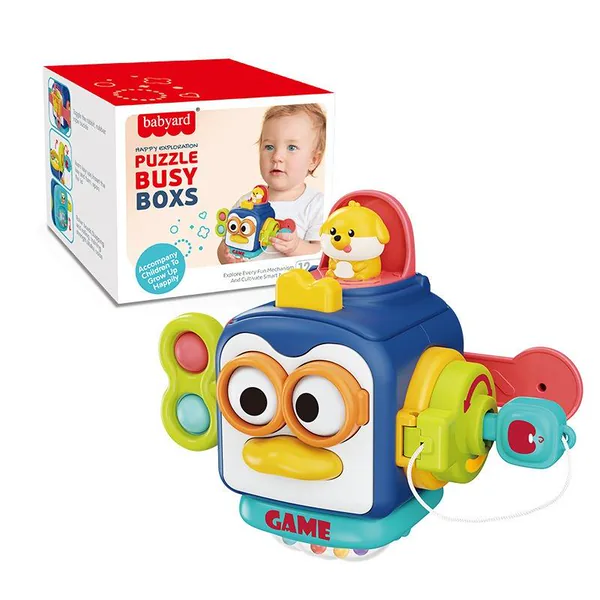
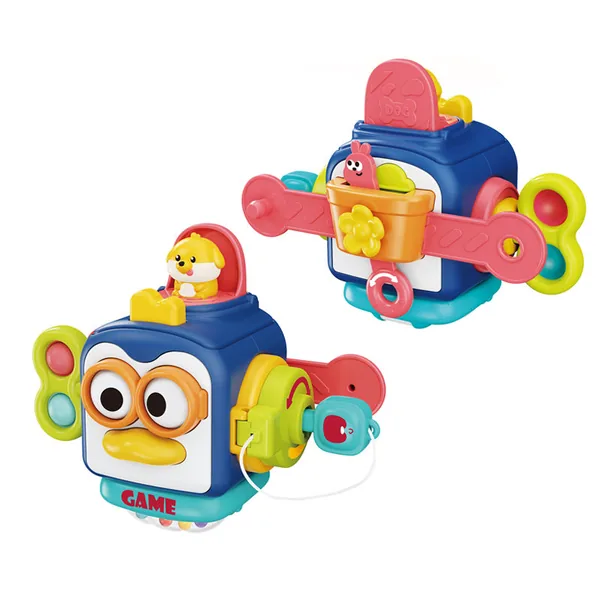
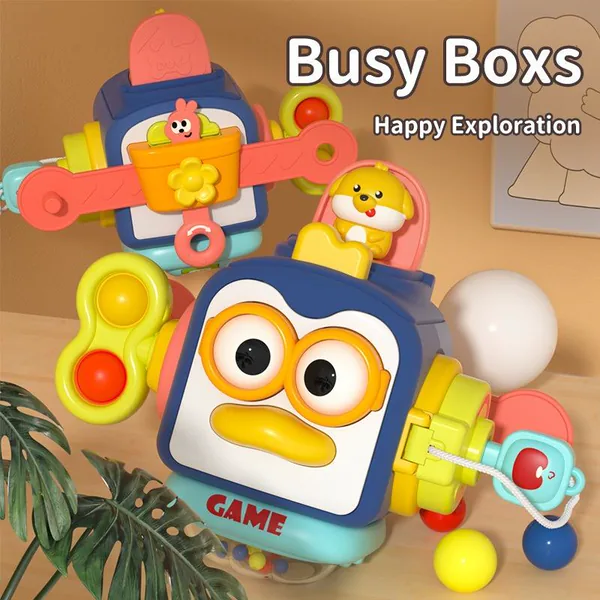
For sensory, puzzle and tactile items, the mold also determines the failure modes your QC team will live with: sharp parting lines, weld-line weakness on thin walls, and dimensional drift on multi-part sets. Those are tooling decisions, not packaging decisions, and they are hard to fix after steel is cut.
What does "lock the resin" actually mean before tooling?
It means the specific grade — not just "ABS" or "PP" — is written into the drawing and the purchase order, with surface finish, color masterbatch and lighting condition for color approval defined at the same time. Color matching should use the same resin grade, surface finish, lighting condition and approved master sample, because appearance changes with all four variables. Change any one and your golden sample no longer represents production.
Resin lot or batch traceability links the molded toy to a material supplier and supports investigation when a later chemical or mechanical result changes. That traceability has to be designed in at the resin stage; it cannot be reconstructed after shipment.
Grade selection is a trade-off between impact resistance, dimensional stability, cycle time and unit cost. ABS is a common choice for durable shells and precision fits; PP is common for high-volume, cost-sensitive parts and lighter components. The correct answer depends on the target age band, the usage environment (classroom table vs. floor play vs. water play), and the destination standard. Confirm bite-force and mouthing performance for anything aimed at infant or toddler use before committing to a flexible grade.
One operational rule worth enforcing: a supplier process, resin, mold, coating, component or sub-supplier change should be notified and risk-assessed before use in a released toy. Put that sentence in your supply agreement. It is the cheapest clause you will ever negotiate.
OEM or ODM: which one fits a school supply catalog?
OEM (your design, their tooling) fits when you need a proprietary look, a specific size for classroom storage, or a curriculum-linked mechanism. You own or co-own the mold, you approve the drawing, and you carry the tooling cost. The upside is differentiation and pricing power. The downside is fixed cost, longer first-article cycles, and the fact that you now own the mold's quality problems.
ODM (their design, your branding) fits when the teaching function is already solved and your differentiation lives in packaging, assortment mix, instructions and compliance documentation. It reaches shelf faster and carries no tooling amortization. The trade-off is that competitors can source a near-identical product, so your moat has to be the program around it — carton configuration, private-label packaging, age-appropriate instructions in the destination language, and a compliance file your buyers can audit.
A practical middle path for school suppliers: ODM for the high-volume commodity SKUs in the assortment, OEM for one or two hero items that define the program. That keeps catalog breadth affordable while giving buyers a reason to stay with you. If you are sourcing classroom reward and sensory assortments, a supplier that publishes clear SKU, carton and MOQ data lets you test this mix before you spend on tooling.
For a concrete example of the ODM side of that mix, a curated sensory and large pop-it range packaged with simple instructions in the destination language entered three private school sensory-corner programs under a contract renewed each semester. Note what that case does and does not show: it evidences curation and program access, not mold decisions. Do not use it as tooling evidence.
What evidence should a buyer demand before paying a tooling deposit?
Ask for a production-part approval package, not a photo of a shiny sample. Production-part approval should compare the first released parts with the signed drawing, the golden sample and the applicable safety test sample. If those three documents do not exist as a controlled set, you are approving a photograph, not a part.
Ask which mold steel grade and cooling design the quotation assumes, and whether the cooling layout is uniform enough to hold dimensions across a long run. Non-uniform cooling shows up later as warpage and inconsistent fit — the kind of defect that generates returns in an institutional channel where nobody has time to sort parts.
Ask for the resin-stage compliance documentation. Certification bodies trace failures back to raw material composition, so BPA-free, phthalate-free and heavy-metal restrictions have to be controlled from the resin, not promised at the end of the line. For US-bound programs the relevant framework is CPSIA plus ASTM F963; for EU-bound programs it is EN71 plus REACH. No material automatically passes either framework — compliance depends on formulation and documentation.
Ask for measurement evidence. Measurement equipment used for release decisions should have a current calibration or verification status. An uncalibrated caliper is an opinion.
Finally, ask for a mold ownership and maintenance clause: who holds the mold, who pays for maintenance, what happens if the supplier changes a sub-supplier, and how you get the mold back. Educational assortments live for years; mold custody disputes are a slow-motion supply interruption.
OEM vs ODM at a Glance for Educational Toy Programs
| OEM (custom tooling) | Your design; differentiation and pricing power; tooling cost and amortization on you; longer first-article cycle; you own mold quality problems |
|---|---|
| ODM (existing mold, your brand) | Proven teaching function; faster to shelf; no tooling amortization; lower differentiation unless packaging and program carry the moat |
| Hybrid (recommended for school assortments) | ODM for high-volume commodity SKUs; OEM for one or two hero items; keeps catalog breadth affordable |
| When custom tooling is justified | When shape, mechanism or classroom format is the reason buyers choose you, and committed volume can spread the fixed cost |
| When ODM wins | Trial semesters, single catalog cycles, standard teaching functions, or when packaging and compliance documentation are your real differentiators |
| Evidence required before deposit | Signed drawing, golden sample, applicable safety test sample, resin grade and lot traceability plan, mold ownership and change-notification clause |
| Material decision must be settled | Before steel is cut — resin grade, surface finish, color masterbatch and lighting condition for approval |
| Compliance framework to confirm | CPSIA plus ASTM F963 (US); EN71 plus REACH (EU) — confirm with the supplier's documentation, never assume from material name |
How should buyers compare suppliers for the same mold brief?
Send the identical technical brief to every candidate and score the responses on completeness, not on price. The brief should include: target age band, destination market, intended use environment, expected annual volume band, packaging format, and whether the mold is new or existing. Suppliers who answer with a material-and-mold recommendation sheet — grade, steel, cooling approach, cycle estimate, tooling assumption, compliance path — are showing you their engineering process. Suppliers who answer with a unit price and a photo are showing you their sales process.
Compare on documentation quality first. A quotation that carries per-product SKU, material, dimensions, packaging method, carton quantity, outer carton dimensions, gross/net weight, age recommendation, test status and optional private-label options can be forwarded directly to a purchasing committee. One sales team rebuilt an incomplete sheet over two days and the buyer's reply was, "This is the first quote I can actually forward to my purchasing team." That is the standard: forwardability, not decoration.
Second, compare change control. Ask each supplier to describe in writing what happens when resin, mold, coating, component or sub-supplier changes after release. A supplier with a written notification and risk-assessment step is materially safer than one that treats it as a conversation.
Third, compare sample discipline. Request the same item from each supplier and check unit weight consistency across the sample set, parting-line quality, and whether the sample matches the drawing dimensions. Weight trending catches short shots and missing components early — cheap, fast, and hard to argue with.
Only then compare price. A cheaper tooling quote that assumes non-uniform cooling or a commodity steel grade is not cheaper; it is a deferred cost that lands in your returns rate.
What should importers verify before sourcing STEM and fidget assortments from China?
Verify the compliance file before the price. For US-bound goods confirm the CPSIA plus ASTM F963 pathway; for EU-bound goods confirm EN71 plus REACH. Ask for the test report covering the actual product and material, not a similar SKU, and check that the report's model description matches what you are buying.
Verify the factory, not just the trading company. Ask who physically owns the injection machines and the mold, and request a video walk-through of the mold storage area with your mold or your candidate mold identified. A supplier who cannot show you where the mold lives does not control your supply.
Verify carton and logistics data against a real shipment. Outer carton dimensions, carton quantity, gross and net weight should reconcile with a sample carton; discrepancies here become freight surprises.
Verify age grading and warnings. Institutional buyers are strict about age recommendation and small-parts warnings; a mismatch between the listing, the packaging and the test report is a rejection risk at the district level.
Verify the private-label path end to end: artwork file requirements, dieline approval, language of instructions, and who signs off the first production carton. Custom packaging and branding for retail-ready products normally requires print-ready artwork, a dieline, and a signed proof; confirm the exact file requirements with the supplier before design work starts, because dieline conventions differ between suppliers.
For assortment planning, catalogs that publish clear SKU, MOQ and carton data let you model landed cost before you request samples. That is a sourcing convenience, not a substitute for the compliance file.
FAQ: Educational Toy Mold and Supplier Decisions
Can educational toy wholesale suppliers offer custom packaging and branding for retail-ready products, and what design files are needed?
Yes, most offer private-label packaging, but the file requirements must be confirmed with each supplier before design starts. Typically you need print-ready artwork and a dieline, plus a signed proof before mass production; dieline conventions and instruction-language requirements differ by supplier, so treat the file spec as a supplier-specific item to verify.
What should importers check before sourcing STEM toys wholesale from China?
Confirm the destination-market compliance pathway first: CPSIA plus ASTM F963 for the US, EN71 plus REACH for the EU, with a test report that matches the actual product and material. Then verify factory ownership of the mold and machines, reconcile carton and weight data against a real shipment, and check age grading and small-parts warnings for consistency across listing, packaging and report.
How can buyers compare reliable suppliers for STEM toys wholesale?
Send one identical technical brief to every candidate and score the written response on completeness: material and mold recommendation, change-control procedure, sample consistency, and a forwardable quotation with SKU, material, dimensions, packaging, carton quantity, outer carton dimensions, gross/net weight, age recommendation and test status. Compare price only after documentation quality.
How can buyers compare reliable suppliers for bulk fidget toys?
For fidget and tactile items, compare sample consistency and unit weight first, since these products are often multi-component and weight variance reveals missing parts or short shots. Then compare mold ownership and change-notification terms, and confirm the compliance file matches the specific SKU rather than a similar item.
What should importers check before sourcing fidget toys wholesale from China?
Check the same core file as any toy import: applicable standard documentation for the destination market, age grading, and packaging warnings. Additionally confirm that flexible or soft-touch components have documented material composition, since chemical compliance is controlled at the resin stage and cannot be verified from a finished-goods photo.
Should I pay for a custom mold for a school assortment program?
Pay for a custom mold only when shape, mechanism or classroom format is your differentiation and your committed first-year volume can spread the fixed tooling cost. For standard teaching functions, trial semesters or single catalog cycles, an existing ODM mold plus private-label packaging usually reaches shelf faster with lower risk.
What mold documentation should I hold before approving mass production?
Hold a controlled set: the signed drawing, the golden sample, the applicable safety test sample, and the production-part approval record comparing first released parts to all three. Add the resin grade and lot traceability plan and a written change-notification clause covering resin, mold, coating, component and sub-supplier changes.
Sources
Related Products & Categories
Request a Quote or a Factory Audit
Send your mold brief — target age band, destination market, use environment, annual volume band and packaging format — and request a material-and-mold recommendation sheet plus a quotation that carries full SKU, carton and test-status data. If you want to verify the tooling and QC process first, ask for a factory audit covering mold storage, resin traceability and measurement calibration status.
Kidumio works with North American distributors, school suppliers and institutional buyers on classroom-ready assortments, from trial mixed cartons to private-label education programs, with SKU data, MOQ guidance, carton information and compliance document coordination. Request a quote or a factory audit to compare the evidence against your own checklist.