What to check before you commit to an educational toy supplier for a school assortment program
Market entry guide for school supply buyers: what to check before sourcing educational toys wholesale—MOQ, packaging, compliance, and the questions that matter.
Hidden costs—packaging rework, compliance delays, and last-minute substitutions—can erase the margin advantage of a low per-unit price before the cartons leave the factory. For a school supply assortment program, the winning move is to vet suppliers on evidence: comparable product spec sheets, MOQ flexibility, packaging readiness, and destination-market compliance documents. This guide walks you through the buyer questions that matter for market entry, from first inquiry to sample approval and inspection planning.
Key takeaways for buyers entering the school supply market
- Treat MOQ as a negotiation starting point, not a fixed rule. Many educational toy suppliers from China work with tiered MOQs—higher volume unlocks better per-unit pricing, but you can start with a trial mixed carton to validate sell-through before committing to a full container.
- Packaging is where school supply assortments win or lose. Ask for retail-ready packaging options (barcodes, hang tabs, polybags) and confirm the design file requirements—usually AI, PDF, or CDR—before you finalize your assortment.
- Compliance is a market entry gate, not a paperwork afterthought. For the US, check CPSC and ASTM F963 requirements; for the EU, the new Toy Regulation introduces stricter warning and labeling rules. Verify the supplier's test reports against your destination market, and always search the CPSC recall database yourself.
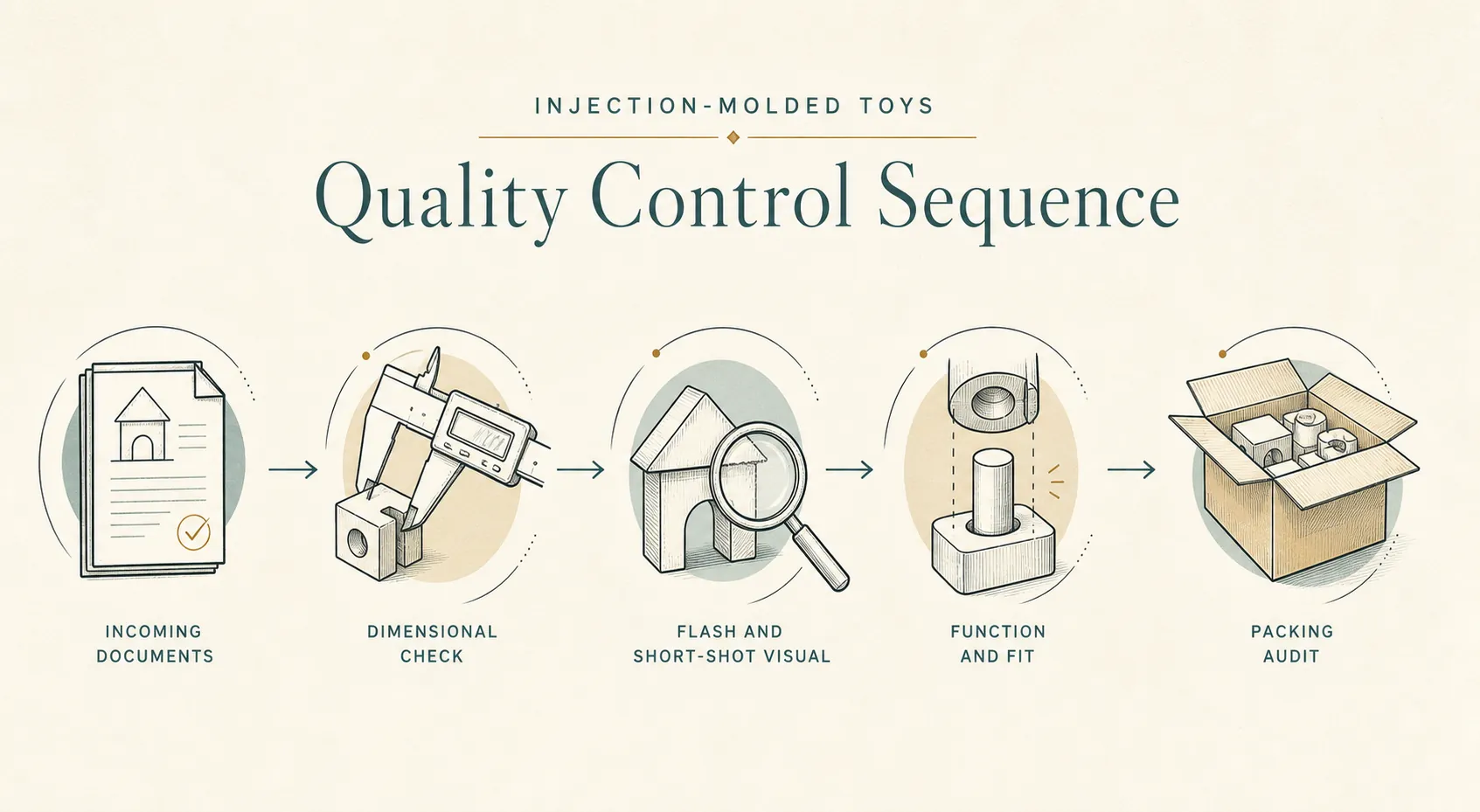
- AQL sampling (based on ISO 2859) is your practical defense against quality surprises. Agree on the inspection level and acceptable quality limits before production, not after the goods are in the warehouse.
- Lead time and shipping cost are real budget lines. From Asia to a US distribution center, plan for 30–60 days of production plus ocean freight; air freight is faster but can change your landed cost per unit significantly.
Why school supply assortment programs are a smart entry point for educational toys
School supply assortment programs are a predictable, repeatable buying channel. Unlike consumer retail, institutional buyers (districts, after-school programs, libraries, summer camps) plan their assortments around curriculum needs and budget cycles. That means demand is less seasonal and more consistent—but it also means the buying process is more formal. You are not just picking products; you are building a SKU list that must meet safety standards, fit a budget, and arrive in time for the school year.
Finding a supplier that behaves like a partner to an institutional program is the real challenge. You need clear SKU data, MOQ guidance, carton information, and packaging options, not just a catalog of cute products. A supplier that offers these is easier to integrate into your catalog and your compliance workflow.
What are the typical MOQ and pricing tiers for educational toy wholesale?
MOQs from Chinese educational toy suppliers vary by product complexity and packaging. Simple items like flash cards or drawing boards can carry MOQs as low as 48–120 units, while electronic or plush items often start at 100–200 units. Higher-volume SKUs like finger spinners can have MOQs in the thousands because the per-unit cost is very low (around $0.41), making smaller orders uneconomical for the factory.
Pricing tiers follow a simple logic: the higher the volume, the lower the per-unit cost. But do not assume the first price sheet is the best. Ask for a tiered quote—MOQ price, a mid-volume price, and a container-load price. This gives you a clear view of how your margin improves as you scale, and it also signals whether the supplier is serious about long-term partnership or just wants a one-off order.
What are the lead times and shipping costs for bulk orders from Asia to the US?
Typical production lead time for educational toys from Chinese suppliers is 15–30 days for standard items, plus 30–40 days for ocean freight from ports like Yantian or Ningbo to Los Angeles or Long Beach. If you are stocking for a fall school year, that means you should place orders by early summer at the latest.
Shipping costs are a major variable. A 40-foot container from China to the US West Coast might cost several thousand dollars, but the per-unit cost drops dramatically when you fill the container. Air freight can be 5–10 times more expensive per unit, which is only viable for urgent restocks or high-margin items. Always ask the supplier for the carton dimensions and weight—that data determines your freight quote and your landed cost per unit. A supplier that cannot provide accurate carton specs is a red flag.
Can suppliers offer custom packaging and branding for retail-ready products?
Most Chinese educational toy suppliers offer OEM packaging, but the level of support varies. Some will handle everything from logo printing to barcode generation; others expect you to supply the design files and may charge extra for packaging materials. Common design file requirements are AI (Adobe Illustrator), PDF, or CDR formats, with a 3mm bleed and specific color modes (CMYK for print).
Before you commit, ask for a packaging sample—not just a digital mockup. Check the print quality, the box strength, and whether the packaging includes all required warnings and certifications. A packaging that fails at the retail shelf is a costly mistake, especially if you have already paid for a container of goods.
What should importers check before sourcing STEM toys wholesale?
STEM toys are a high-demand category in school supply programs, but they also carry specific compliance risks. Check that the supplier's test reports cover the relevant standards for your market—ASTM F963 and CPSIA for the US, EN71 for the EU. Also verify that the product's intended use matches its classification. A beach or pool accessory is not automatically an aquatic toy; classification depends on intended play, water use, and the applicable market definition. Misclassification can lead to customs holds or recalls.
Beyond compliance, check the educational value claims. A STEM toy that is just a box of plastic parts may not meet your program's learning objectives. Ask the supplier for a product description that explains the learning outcomes, and verify that the materials are durable enough for classroom use. ABS plastic is common, but 'eco-friendly' ABS is a different spec—confirm the actual material composition.
Supplier evaluation checklist for school assortment programs
| MOQ flexibility | Ask for tiered MOQs and a trial mixed carton option. Red flag: supplier insists on container-load minimums without a small-order path. |
|---|---|
| Packaging & branding | Confirm OEM capabilities, design file formats (AI/PDF/CDR), and request a physical packaging sample before mass production. |
| Compliance documents | Request test reports for destination market (ASTM F963/CPSIA for US, EN71 for EU). Check CPSC recall database for product/brand mentions. |
| Lead time & shipping | Confirm production lead time and carton specs (dimensions, weight) for freight calculation. Plan for 30–60 days total. |
| Inspection & quality | Agree on AQL sampling (ISO 2859) and inspection level before production. Red flag: supplier refuses third-party inspection. |
Worked example (illustrative, not a real shipment)
Imagine you are a US distributor planning a school supply assortment for the fall term. You decide to order 5,000 units of a flash card set (MOQ 120, unit price $1.83) and 2,000 units of a building block set (MOQ 108, unit price $2.45). The flash cards are destined for a school district in California; the blocks for a catalog program in Texas. The California order requires bilingual packaging (English/Spanish) and a specific warning label; the Texas order needs a barcode for retail tracking.
You ask the supplier for packaging samples for both. The flash card sample shows the warning text is too small and not legible—that would fail the US market's visibility rules. You request a revised sample, which adds two weeks to the lead time. The block set sample is fine, but the carton dimensions are larger than expected, increasing your freight cost by 8%. Without these checks, you would have shipped non-compliant packaging and overpaid on freight. The lesson: always verify packaging and carton specs before production—it's cheaper to fix a sample than a container.
What to ask suppliers before placing an order (RFQ checklist)
Here is a practical RFQ checklist to send to any educational toy supplier you are considering. Use it as a template for your first inquiry.
1. What are your MOQ tiers for each product, and can you accommodate a trial mixed carton?
2. Can you provide a tiered price list (MOQ, mid-volume, container-load)?
3. What packaging options do you offer—retail-ready, OEM, private label—and what are the design file requirements?
4. Can you provide a physical packaging sample for approval before production?
5. What test reports do you have for the destination market, and can you share them?
6. What is your production lead time, and what are the carton dimensions and weight for freight calculation?
7. Do you accept third-party inspection, and can we agree on an AQL sampling level?
8. How do you handle last-minute additions or changes to an order?
9. What is your policy on defects or non-compliance after shipment?
10. Can you provide references from other school supply or institutional buyers?
What to check this year for new compliance updates
The regulatory landscape for toys is shifting. For the EU, the new Toy Regulation (entered into force in 2024) introduces stricter requirements on warnings, labeling, and digital documentation. The application date for many provisions is set for 2026, but the official text does not confirm a single application date for all requirements. Check the European Commission's website for the current timeline before planning your EU market entry.
For the US, the CPSC publishes recalls and enforcement actions. Search the CPSC recall database by product, brand, and hazard before you source a new item. Remember: an absence of a recall is not a safety certification—it just means no market action has been recorded. Always verify that the supplier's test reports are current and cover the specific product configuration you are ordering.
FAQ: Buyer questions for educational toy sourcing
What MOQ should I expect for a custom educational toy order?
MOQs vary by product type and complexity. Simple items like flash cards can start at 120 units, while electronic toys may require 200–500 units. Always ask for a tiered quote to find the sweet spot between volume and per-unit cost.
How long does it take to get a sample from a Chinese supplier?
Sample production typically takes 7–15 days, plus shipping time (3–7 days by express). For custom packaging, add another 5–10 days for artwork approval. Plan for 2–3 weeks total for a sample cycle.
What are the main compliance documents I need for importing educational toys to the US?
For the US, you need a Children's Product Certificate (CPC) based on testing to ASTM F963 and CPSIA requirements. The supplier should provide test reports from an accredited lab. Check CPSC's website for the latest requirements.
Can I order a mixed container with different SKUs?
Yes, most suppliers allow mixed SKU orders, but MOQs apply per SKU. A mixed container can help you test multiple products and reduce inventory risk. Confirm the supplier's carton configurations and any additional charges for mixed loading.
What is the typical lead time for a full container order?
Production usually takes 20–30 days after sample approval, plus 30–40 days for ocean freight to the US. For a fall school year, place orders by early summer. Air freight can shorten delivery but at a much higher cost.
How do I verify that a supplier is legitimate?
Request business licenses, factory audits, and third-party inspection reports. Ask for references from other school supply buyers. A legitimate supplier will be transparent about their production capacity and compliance documents.
Sources
Related Products & Categories
Get a quote for your school supply assortment
Ready to build your educational toy assortment? Request a quote from a supplier that understands school supply programs—clear SKU data, MOQ guidance, packaging support, and compliance coordination. Start your market entry with the right questions, and get a response that helps you decide.