Educational Toy Samples for Guided Activity: Spec the Activity First, the Toy Second
How school suppliers and institutional buyers should evaluate educational toy samples for guided activity: age grading, CPC/EN71 documents, MOQ and sample-pack fit.
Educational toy samples for guided activity should be qualified against the activity's age grade and supervision model, not against how good the toy looks on a table. If the guided activity is designed for children 12 or younger, the sample is a regulated children's product in the US and generally needs third-party testing at a CPSC-accepted laboratory plus a Children's Product Certificate; if it targets 13+, ASTM F963 may still apply but the testing and CPC requirement does not. That distinction decides which samples are even eligible for your new-supplier qualification and pilot-order program, and it should be settled before you ask for pricing.
This page is written for school suppliers, educational distributors, classroom buyers and institutional purchasing teams. It covers what a guided-activity sample pack must contain, how to read a CPC or EU Declaration of Conformity without being fooled, how to run a mixed classroom sample pack as a pilot, and where MOQ posture realistically sits across the educational toy category.
What Buyers Should Decide Before Requesting Samples
- Age grade is the gate, not the label: under US rules, products intended primarily for children 12 or younger need third-party testing and a CPC; 13+ toys may still fall under ASTM F963 but are outside the testing and certification requirement. Ask the age question before the price question.
- A sample pack is a qualification tool, not a shopping cart. Require one sample per activity type (sorting, construction, literacy, tactile) with the same SKU documentation you would need at bulk, so the pilot tests your process, not just the toy.
- Certification is product-specific. A CPC names the product, the applicable CPSC rules, the manufacturer or importer, the testing dates and the accepted laboratory; it is not a factory-level credential and should never be accepted as one.
- MOQ in this category is not one number. Catalog records for classroom-style SKUs commonly sit in bands from a single unit up to several hundred pieces, so quote a mixed pilot carton separately from a full production run.
- Retained samples and lot identification are what make a later dispute resolvable. Color, construction and packaging drift between sample and bulk is the most common pilot failure, and it is preventable with a signed golden sample.
What Should a Guided-Activity Sample Pack Actually Contain?
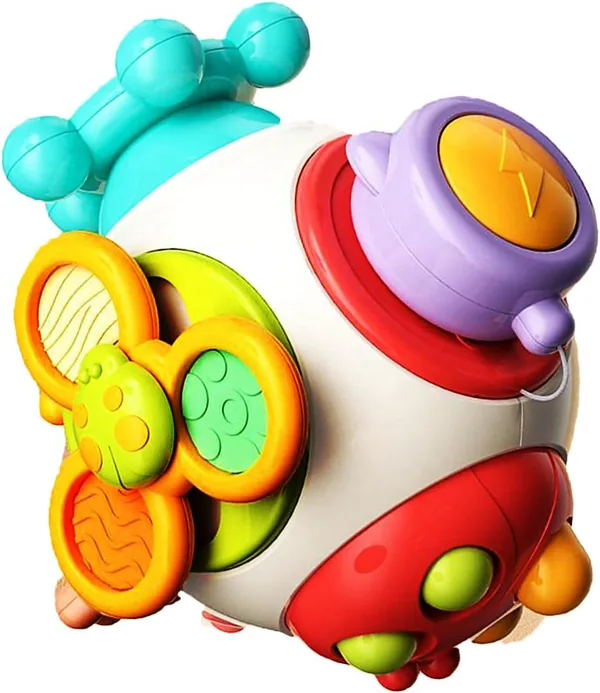
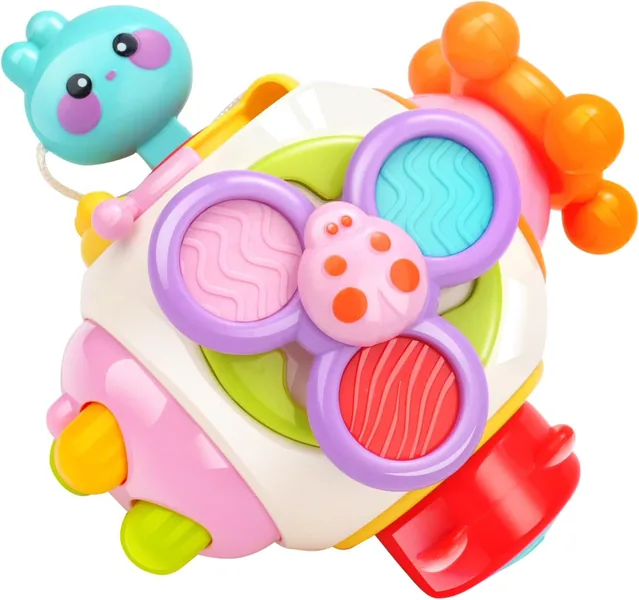
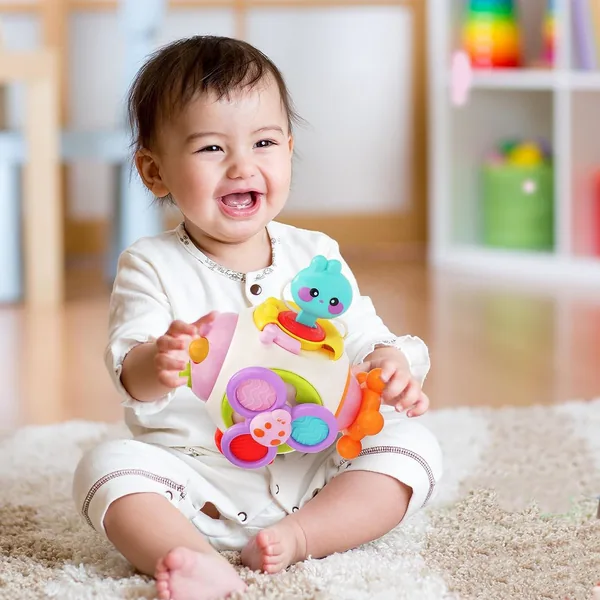
A guided-activity sample pack should contain four things: the toy, the activity instruction sheet, the age-grade and warning labeling exactly as it will ship, and the compliance document for that SKU. If any one is missing, you cannot complete a supplier qualification on it, and you will re-do the pilot later.
The instruction sheet matters more than most buyers expect. A guided activity only works if an adult who is not the designer can run it from the printed page in under five minutes. Review the sheet for the target age band, the number of children it assumes, the setup and cleanup time, and whether it repeats. Toys that demo well often fail here, because the demo was run by the seller, not by a teacher.
Labeling is a compliance field, not artwork. Warning text, age grading, small-parts statements and the responsible-party identification have to match the intended market and the shipped configuration. Treat packaging copy as controlled: every wording change is a change you should sign off on, because it can invalidate the document set you collected with the sample.
For a mixed classroom pilot, insist on one carton that spans the activity types you actually sell. A sensory or activity-cube SKU, a construction or STEM building SKU, a literacy or math SKU, and a tactile or reward SKU give you four different risk profiles in one shipment — small parts, magnets or batteries, printed components, and durability under repeated handling.
How Do You Verify a Chinese Educational Toy Supplier Without Visiting?
You verify a Chinese educational toy supplier the same way you verify any supplier: documents first, samples second, audit third. Documents are cheap to fake and cheap to check, so start there and let the sample and audit confirm what the paper claims.
Step one is the compliance document set. For the US, ask for the CPC and the underlying test reports; both must be in English, and the CPC should identify the product, cite each applicable CPSC children's product safety rule, name the domestic manufacturer or importer certifying compliance, give contact details for the person keeping test records, state the date and place of manufacture and testing, and identify the third-party CPSC-accepted laboratory. For the EU, ask for the EU Declaration of Conformity and the test reports behind the CE marking, mapped to the correct directive and harmonised standard for that product. According to the current regulation at 16 CFR part 1250, the applicable edition of the US toy standard should be read from the regulation itself before anyone quotes a report number.
Step two is the sample. Order it against a written spec: material, color reference, dimensions, unit weight, carton configuration, and the retail or institutional packaging you intend to use. Keep a signed golden sample and record the model and lot so a later batch can be compared against it. If the supplier cannot tell you which lot your sample came from, that is information.
Step three is the audit. A social-compliance or generic factory audit tells you about management systems; it does not tell you whether this specific SKU passes small-parts, magnet flux or battery-access requirements. Match the audit scope to the product risk: injection molding process control if you care about dimensional repeatability, in-line inspection and retained-sample discipline if you care about color and construction consistency, and a scope statement that names the SKU family being audited. Note also that tooling ownership, movement rights, maintenance and storage are contractual terms — paying a sample or development fee does not imply them.
Educational Toy Sample Types: What Each One Tests and What It Costs You
| Sensory / activity cube sample (ABS) | Tests: fine-motor assembly, knob and latch durability, repeated-use wear. Ask for: material spec, unit weight, carton data, CPC if under-12. MOQ posture: catalog records show bands from roughly 80 to 480 pieces depending on SKU. Watch: detachable parts and small-parts compliance. |
|---|---|
| Construction / STEM building sample (ABS) | Tests: clutch or friction fit, piece count accuracy, sharp-edge and point review, magnet or battery handling if present. Ask for: piece count per set, spare-part policy, EN 71 or ASTM F963 report matched to the configuration. MOQ posture: varies by spec, often lower than large molded items. Watch: color consistency between molded lots. |
| Literacy / math classroom sample (plastic, printed components) | Tests: print durability, card or tile thickness, whether the activity is repeatable across a class set. Ask for: card stock and print spec, packaging format, set completeness. MOQ posture: catalog records commonly sit in the low tens to low hundreds. Watch: packaging wording as a controlled field. |
| Tactile / fidget and reward sample | Tests: material feel, odor, deformation under repeated squeeze, choking-hazard profile for the stated age. Ask for: material declaration, age grading, warning labeling. MOQ posture: varies by spec and is often the most flexible category for mixed pilot cartons. Watch: unsupported claims about calming or therapeutic benefit. |
| Mixed classroom sample pack | Tests: your own qualification workflow across four risk profiles in one shipment. Ask for: one line item per SKU with material, MOQ, carton data and document status. MOQ posture: negotiated as a pilot carton, separate from production MOQ. Watch: the temptation to accept a hero sample and assume the rest of the range matches. |
Which Certification Applies to Educational Toys Sold in the US or EU?
In the US, the applicable framework depends on age grading. According to CPSC toy safety guidance, toys designed or intended primarily for children 12 or younger are subject to CPSC third-party testing and certification requirements, and ASTM F963 is a mandatory consumer product safety standard codified at 16 CFR part 1250. Toys marketed to 13 and older may still be subject to ASTM F963 but do not require third-party testing at a CPSC-accepted laboratory or a CPC. Within ASTM F963, the sections that bite hardest on guided-activity products are small parts, hazardous edges, hazardous points, magnets and battery-operated toys — exactly the features that make a hands-on activity engaging.
In the EU, toys placed on the market must meet the essential safety requirements of the Toy Safety Directive 2009/48/EC, with CE marking and an EU Declaration of Conformity tied to the product scope. The General Product Safety Regulation (EU) 2023/988 is a separate instrument and adds its own traceability and responsible-person expectations; do not treat it as a substitute for the Toy Safety Directive. One useful edge case: EN 71-8 covers activity toys for domestic use such as swings and slides, so a guided-activity product that is really play equipment falls under a different part of the standard than a tabletop toy.
Two documentation habits separate professional buyers from amateurs. First, never quote a standard, guidance page or audit framework as proof that a specific factory or SKU is certified — the document must name the product and the responsible party. Second, keep tracking information and lot control in the same review as packaging and product markings, because when a problem surfaces eighteen months later, the lot is what lets you isolate it.
Sample Review Checklist: What to Ask For and What to Accept as Evidence
| Age grade and intended user | Ask: stated age band, supervision model, whether the activity assumes one child or a group. Accept as evidence: a written statement that matches the shipped labeling. Do not accept: "suitable for all ages" or a verbal range. |
|---|---|
| Compliance document for the exact SKU | Ask: CPC plus English test reports for US under-12 products; EU Declaration of Conformity plus test reports for EU. Accept as evidence: a document naming the product, the applicable rules, the responsible party and the testing laboratory. Do not accept: a factory-level certificate or a scanned report with no product identification. |
| Material and component disclosure | Ask: material per part, magnet presence and flux information, battery type and access method. Accept as evidence: a written spec sheet tied to the SKU. Do not accept: a category-level statement such as "ABS" with no part mapping. |
| MOQ, tiering and validity | Ask: MOQ per SKU, whether it tiers by quantity or packaging, how long the quoted terms hold, and whether a mixed pilot carton is available. Accept as evidence: a written quotation with those fields. Do not accept: an MOQ number given verbally on a call. |
| Carton and logistics data | Ask: carton dimensions, gross and net weight, units per carton, carton marking content. Accept as evidence: a carton spec sheet. Do not accept: an estimate you cannot plan freight around. |
| Retained sample and lot control | Ask: whether a signed golden sample is retained and how lots are identified on the product and carton. Accept as evidence: a lot numbering scheme and a retained-sample commitment. Do not accept: "the factory will remember". |
| OEM packaging and artwork control | Ask: dieline, print method, minimum print run, and who approves each artwork revision. Accept as evidence: a written change-control step. Do not accept: an assumption that packaging copy is fixed once approved. |
Can Suppliers Offer Custom Packaging and Branding for Retail-Ready Educational Toys?
Yes, custom packaging and branding are widely available in the educational toy category, and the practical constraint is not capability but print run. Ask for the dieline, the print method, the minimum print quantity, and the artwork approval step. Then ask what happens to packaging copy that is also a compliance field — warning statements, age grading, responsible-party identification and tracking information — because those cannot be edited casually after approval.
Design file requirements are usually straightforward: vector artwork for logos and text, a working file for the dieline, color references, and barcode or item number data. What buyers underestimate is version control. Insist on a written approval per revision and keep the approved file with the retained sample. If a shipment arrives with different warning text than the file you approved, you want the paper trail.
One caution on branding for institutional channels: private-label education programs usually need the packaging to survive catalog photography, shelf handling and repeated classroom use. Ask for a printed sample, not a digital mockup, before you commit a print run.
How Do You Compare Two Educational Toy Suppliers Fairly?
Compare suppliers on the same six fields and score them, rather than comparing two salespeople's enthusiasm. The fields are: document completeness for your destination market, sample-to-spec accuracy, MOQ and pilot-carton flexibility, carton and logistics data quality, retained-sample and lot-control discipline, and OEM packaging control.
Weight the fields by your own risk. A distributor building a catalog needs document completeness and OEM control more than a buyer running a single classroom pilot, who needs sample accuracy and pilot flexibility. Write the weights down before the samples arrive; it stops a beautiful activity cube from winning on charm.
Two tie-breakers. First, ask each supplier to describe a defect that reached a customer and what changed afterward — the answer tells you more than any audit summary. Second, ask for the person who owns compliance, not the person who owns sales. If those are the same person and there is no process behind them, your document set is one resignation away from being unmaintainable.
What Should Importers Check Before Sourcing STEM and Fidget Toys From China?
For STEM toys, check the hazard profile that matches the activity: small parts and detachable components, magnet flux if magnets are present, battery access and charging safety if the kit is powered, and chemical compliance if the kit includes any experiment material. Age appropriateness is a distinct testing stage, not a label you can assign after production, so confirm it during the sample stage.
For fidget and tactile toys, the checks shift toward material declaration, odor and deformation under repeated use, and the choking-hazard profile for the stated age. These products often sit in the widest age-ambiguous zone, which makes the age grading decision commercially important as well as legally important.
In both cases, confirm that the sample was tested against the standards of each destination market you actually ship to, and that the report identifies the product configuration. A report for one colorway or one piece count does not automatically cover a variant. For the US, plan around the electronic filing requirement for certificates of compliance that begins July 8, 2026 for most regulated consumer products — the document set has to exist in a form you can transmit, not just in a PDF folder.
Where Mixed Classroom Sample Packs Fit in a New-Supplier Qualification
A mixed classroom sample pack belongs after document screening and before a production purchase order. Used that way, it tests four things at once: whether the supplier can assemble a multi-SKU shipment, whether the documentation is complete per SKU, whether packaging and labeling match the approved files, and whether your own receiving and inspection process can handle a varied carton.
Used as a shopping exercise, it fails. Buyers who treat the sample pack as a way to pick favorites end up with a collection of attractive toys and no supplier evidence, then repeat the whole exercise at the production order stage when the cost of being wrong is much higher.
Set the pilot acceptance criteria before the carton ships: document completeness per SKU, sample-to-spec match, labeling accuracy, and a written response to each observation. If the pilot passes, you have a qualified supplier and a documented baseline. If it fails on documents, you have saved a production run. Either outcome is worth the carton.
FAQ: Educational Toy Samples and Guided-Activity Sourcing
Do educational toy samples for guided activity need a Children's Product Certificate?
Only if the product is designed or intended primarily for children 12 years of age or younger. Toys for that group generally require third-party testing at a CPSC-accepted laboratory and a CPC based on those results. Toys intended for 13 and older may still fall under ASTM F963 but do not require third-party testing or a CPC. Confirm the age grade in writing before you request the certificate.
What should a CPC contain for an educational toy sample?
A CPC should identify the product, cite each applicable CPSC children's product safety rule, name the domestic manufacturer or importer certifying compliance, give contact details for the person maintaining test records, state the date and place of manufacture, state the date and place of testing, and identify the third-party CPSC-accepted laboratory. It must be in English, and no specific template is required as long as those elements are present and accurate.
Is a factory certificate enough to approve a Chinese educational toy supplier?
No. A CPC is product-specific and should not be described as a blanket factory certificate. Ask for the certificate and the underlying test report that matches the exact SKU, configuration and age grade you intend to order. A factory-level document tells you nothing about whether your specific product passed the applicable requirements.
What MOQ should I expect for a mixed classroom sample pack?
Treat the pilot carton as a negotiated item separate from production MOQ. Catalog records for classroom-style educational SKUs commonly sit in bands from a single unit up to several hundred pieces depending on the item, so ask for MOQ per SKU, whether it tiers by quantity or packaging, how long the terms hold, and whether a mixed pilot carton is available. Never plan a program on a verbally quoted MOQ.
How do I verify a supplier's OEM packaging without visiting the factory?
Request the dieline, print method, minimum print quantity and a written artwork approval step, then ask for a printed packaging sample rather than a digital mockup. Confirm who owns each revision, because warning statements, age grading, responsible-party identification and tracking information are controlled fields that cannot be edited casually after approval.
What is the most useful thing to check during a factory audit?
Match the audit scope to the product risk rather than buying a generic audit. For molded educational toys that means injection process control if dimensional repeatability matters, and in-line inspection with retained-sample discipline if color and construction consistency matter. Ask the auditor to name the SKU family in scope, and remember that tooling ownership, movement rights and storage are contractual terms, not audit findings.
Does EN 71-8 apply to guided-activity toys?
EN 71-8 covers activity toys for domestic use, such as swings, slides and similar equipment, so it applies only if your guided-activity product is genuinely play equipment rather than a tabletop or handheld toy. Most classroom educational toys are assessed under the parts of EN 71 that match their material and hazard profile. Confirm the applicable part against the current standard before quoting it to a buyer.
Sources
Related Products & Categories
Request a Sample Pack or a Factory Audit
If you are qualifying a new educational toy supplier for a classroom pilot, start with the documents and one mixed sample carton. Send us your destination market, target age grade, activity types and pilot quantity, and we will return SKU-level material, MOQ, carton data and the compliance document status for each item so you can score suppliers on the same fields.
Buyers who need a deeper check can request a guided factory audit scoped to the SKU family under evaluation. Kidumio supplies sensory learning toys, puzzle play products, tactile fidgets and classroom reward assortments for North American distributors, school suppliers and institutional buyers, with SKU data, MOQ guidance, carton information, OEM packaging options and destination-market compliance document coordination.