
Classroom Fidget Toys Wholesale: Case-Pack Planning Starts With One Factory Visit
A factory-visit checklist for classroom fidget toy wholesale buyers: what to inspect at the door, on the sample, and which records to take away.
For classroom fidget toy wholesale, case-pack planning is not a spreadsheet exercise — it is a verification exercise. Before you lock a master-case quantity, you need to see, on site or on a documented sample, what actually goes into the carton, which SKU-level documents exist, and what the supplier can hand you before you leave. A buyer who leaves a factory with a carton spec sheet, a material confirmation, and a product-specific test record is in a position to plan case packs. A buyer who leaves with a brochure is not.
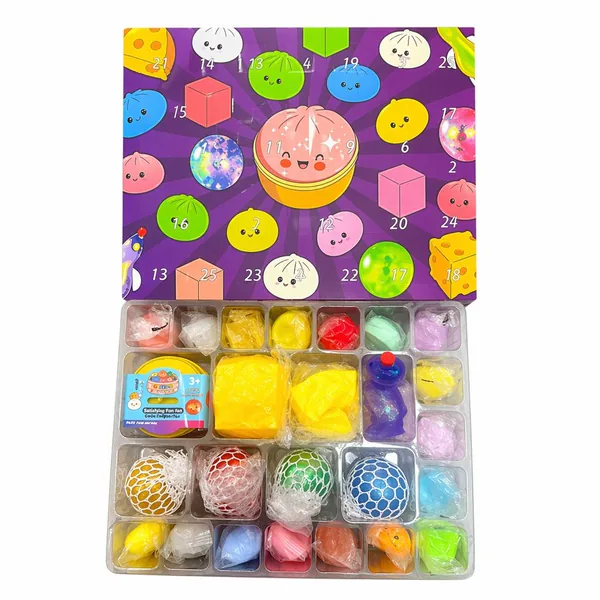
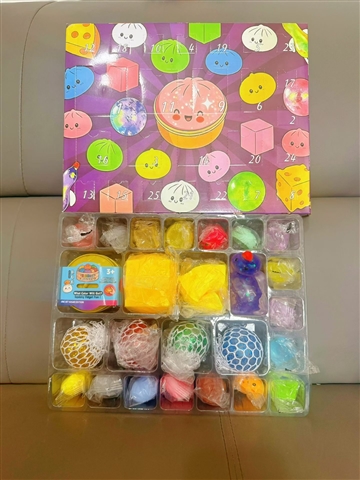
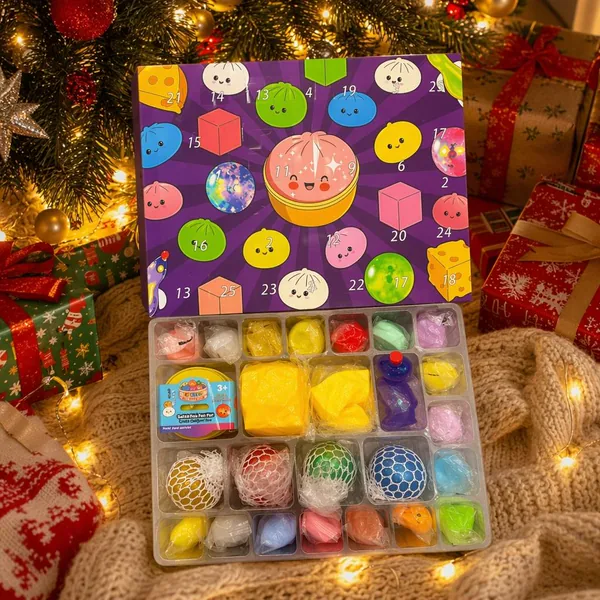
This page covers the day itself: what to check at the door, what to look at on the sample, and which records must leave the building with you. The standard for every claim is written evidence tied to a SKU, not to a factory's general reputation. A typical tactile fidget item in this category — such as a silicone squeeze set — carries its own MOQ, material and carton data that must be confirmed line by line, not assumed from a catalog page.
At the door: which document do you ask for first, and what stops the visit?
Ask for the product-specific compliance file for the exact SKU you intend to buy, before you walk the floor. According to CPSC business guidance, children's toys generally require testing at a CPSC-accepted laboratory and a Children's Product Certificate; the CPC is based on testing results and identifies the applicable rules and responsible parties, and it is product-specific — it is not a blanket factory certificate. If the supplier produces a factory-level quality certificate instead of a SKU-level CPC, that is a mismatch, not a substitute.
For the EU, the applicable instrument is the Toy Safety Directive 2009/48/EC, which requires toy products placed on the market to meet the applicable essential safety requirements; CE marking and an EU Declaration of Conformity belong to the conformity process and must be matched to the product scope. The General Product Safety Regulation (EU) 2023/988 is a separate legal instrument from the Toy Safety Directive, so do not let one document stand in for the other.
The practical stop rule: if the file identifies a different product configuration, a different age grade, or a different standard edition than the item you are buying, do not continue the visit as a sourcing visit. Switch it to a data-collection visit and leave the commercial discussion for later. The applicable edition of 16 CFR Part 1250 and ASTM F963 should be read from the current regulation before a report is quoted, and the exact edition and incorporated regulatory status of ASTM F963 should be checked before it is cited at all.
Two more items worth asking for at the door, both cheap to check: tracking labels, which should be permanent and support product identification where applicable, and the age-grading rationale, because age grading and small-part risk are connected and must be assessed for the actual product configuration. If a supplier cannot explain why a fidget is graded for a given age band, the case-pack label you plan to print is exposed.
What to record for each candidate supplier
| Supplier type | Factory / trading company / mixed — ask for the legal entity on the invoice |
|---|---|
| Specialty (plush/plastic/educational/fidget) | varies by spec — record the category you actually saw produced |
| MOQ posture | varies by spec — catalog MOQ is a figure, not a confirmed order term until quoted |
| Origin (Chenghai/Shantou/Yiwu/other) | varies by spec — record the production site, not the sales office |
| OEM/ODM | OEM normally means the supplier manufactures to the buyer's specified design, brand or technical requirements; the contract should define the exact scope |
| Certifications to ask for | Product-specific CPC for the US; EU Declaration of Conformity and CE conformity matched to product scope for the EU — request the actual document, never accept a logo |
| Carton pack quantity per case | varies by spec — request in writing before quoting freight |
| Carton dimensions and weight | varies by spec — needed for container fill and landed cost |
| Material confirmation per SKU | varies by spec — a blank material field is a data gap, not a finding |
| Defect classification | Should define critical, major and minor defects in the buyer's quality agreement rather than relying on informal factory language |
| GS1 GTIN handling | GS1 GTINs identify trade items and should be assigned and managed according to the brand owner's GS1 rules |
On the sample: what do you open, and what do you ask while it is in your hand?
Open the sample the way a classroom would use it, not the way a catalog photographs it. Pick it up, squeeze it, drop it on the table, and listen. Noise and residue are practical classroom constraints, so a fidget that rattles or leaves a film on the desk fails the quiet-classroom use case regardless of how it looks. Then look at the parts: assemblies, detachable accessories and packaging components need the same review discipline as the main body, because age grading and small-part risk apply to the whole configuration.
Ask one question per observation, and write the answer down in the supplier's own words. What is the material of the outer skin — silicone, TPR, metal, mixed sensory materials? Is there a recorded material field for this SKU, or is it blank? A blank field means the data is not recorded in the catalog you were shown; it does not mean the material is absent. For rigid or semi-rigid molded parts, HDPE is generally stiffer than LDPE and is used for rigid or semi-rigid molded and blow-molded parts when its chemical and impact balance fits the design — useful when you are comparing a firm-bodied fidget against a soft one.
Then ask what the sample does not show you. Which test report covers this exact configuration, age grade, material and test edition? A report must match the product, age grade, material and test edition, so a report for a different colorway or a different size is not evidence for this SKU. If the supplier answers with a factory certificate, redirect once: you are asking about the product, not the building.
If you are building a mixed case, treat the assortment as a set of separate verification tasks rather than one approval. A tactile fidget, a puzzle item and a building toy each carry their own age grading, material and test record, and one approved line does not clear the others. Assortment breadth is a planning input, not a compliance shortcut.
Before leaving: which records must be in your bag?
Leave with documents tied to a SKU number, a version date and a responsible party. Anything that cannot be tied to those three fields is a conversation, not a record. Where a field is missing, write unknown in your own file and keep it unknown — do not fill the gap from memory or from a later sales email.
The minimum set for case-pack planning: a carton specification per SKU (pack quantity, carton dimensions, carton weight); a material confirmation per SKU; the product-specific conformity document for your destination market; the name of the legal entity that appears on the invoice; and the sampling or inspection record you used to approve the sample. For US-bound goods, the CPC is product-specific and should not be described as a blanket factory certificate. For EU-bound goods, keep the Declaration of Conformity and the CE conformity mapping next to the SKU sheet.
Also take the tracking-label artwork and the packaging dieline, since packaging, product markings and lot control should be reviewed together. If the supplier offers OEM packaging, confirm what the scope actually includes: OEM normally means the supplier manufactures to the buyer's specified design, brand or technical requirements, and the contract should define the exact scope — artwork ownership, dieline approval and print proof sign-off are separate steps from the toy itself.
One closing note on numbers. A catalog MOQ is a planning figure, and a quoted MOQ is a commercial term; they are not the same thing, and neither one is a carton quantity. Case-pack math runs on carton data, not on MOQ. If the carton sheet is still blank when you leave, your next action is a written carton-data request, not a purchase order.
FAQ
What should importers check before sourcing fidget toys wholesale from China?
Check the product-specific conformity document first, not the factory's general reputation. For the US, children's toys generally require testing at a CPSC-accepted laboratory and a Children's Product Certificate, and the CPC is product-specific rather than a factory-wide certificate. For the EU, confirm the Toy Safety Directive 2009/48/EC conformity position and keep the General Product Safety Regulation (EU) 2023/988 mapped separately, since it is a different legal instrument.
How can buyers compare reliable suppliers for bulk fidget toys?
Compare on documents you can hold, not on claims you can read. Ask each candidate for the same four items — SKU-level carton data, material confirmation, the destination-market conformity document, and a sample-approval record — then compare the completeness of those four files across suppliers. A supplier with a complete file for one SKU is more comparable than one with a glossy catalog and no carton sheet.
What is the minimum order quantity for classroom fidget toys?
MOQ varies by SKU, material and packaging format, so there is no single figure for the category. Treat any catalog MOQ as a planning figure only: it is not a confirmed order term until it is quoted against your specification, and it is never the same number as carton pack quantity. Ask for MOQ and carton data together, because case-pack planning depends on the carton, not on the MOQ.
Can educational toy suppliers offer custom packaging and branding, and what design files do they need?
Yes, OEM packaging is common, and OEM normally means the supplier manufactures to the buyer's specified design, brand or technical requirements — so the contract should define the exact scope before artwork starts. Expect to supply a dieline-ready artwork file and a print proof approval, and to confirm who owns the artwork. Packaging, product markings and lot control should be reviewed together, because a packaging change can alter what the label must say.
Which certification applies to fidget toys sold in the EU?
The Toy Safety Directive 2009/48/EC applies to toys placed on the EU market, and CE marking plus an EU Declaration of Conformity belong to that conformity process and must be matched to the product scope. GPSR (EU) 2023/988 is a separate instrument, so importer, manufacturer and product-identification information should be mapped to the relevant market role separately. Always read the current consolidated text before quoting a standard or a report.
Does a factory certificate prove a fidget toy is compliant?
No. A product-specific certificate is what matters, and it should identify the applicable rules, the responsible parties and the test basis. A test report should also identify the product configuration, age grade and standard edition, so a report that does not match your exact SKU is not evidence for that SKU. Treat any standard, guidance page or audit framework as a checklist — never as proof that a specific factory or product is certified.
Sources
Related Products & Categories
Plan the visit before you plan the case pack
If you are building a classroom fidget assortment and want the SKU-level data — material, MOQ posture, carton information and packaging options — laid out before you travel, start with a supplier that publishes it. Kidumio supplies sensory learning toys, tactile fidgets and classroom reward items for school suppliers and institutional buyers, and can coordinate the compliance document set per SKU during sample review.
Request a quote or a factory audit slot, and bring the checklist above with you. The visit is only worth the flight if you leave with records, not with impressions.