Supplier · Jul 23, 2026
China vs India Toy OEM/ODM 2026: Factory Verdict
Debunking the 'India will replace China' myth: a 2026 OEM/ODM comparison for importers, covering mold speed, MOQ reality, and where Chenghai still wins.
In short: Debunking the 'India will replace China' myth: a 2026 OEM/ODM comparison for importers, covering mold speed, MOQ reality, and where Chenghai still wins.
For any toy OEM/ODM program requiring a new mold in under 45 days, China's Chenghai cluster remains the only viable choice in 2026. India's domestic toy industry is growing rapidly, but its mold-making velocity, material supply chains, and certification density still lag far behind Guangdong's integrated ecosystem. India is not replacing China—it is emerging as a supplementary source for a narrow band of low-complexity, high-volume wooden and basic plastic toys where longer lead times are acceptable.
This analysis compares the world's densest toy manufacturing hub—Chenghai, Shantou—against India's developing clusters around Delhi and Mumbai. You will get a direct manufacturer comparison, a breakdown of regional specializations, a sourcing-method risk matrix, and a product-first selection framework. Whether you are a North American distributor scaling a private-label STEM line or an institutional buyer sourcing classroom rewards, this page gives you the facts to decide, not the hype.
Top Manufacturers: China vs. India at a Glance
| Manufacturer | Typical Chenghai OEM/ODM Factory |
|---|---|
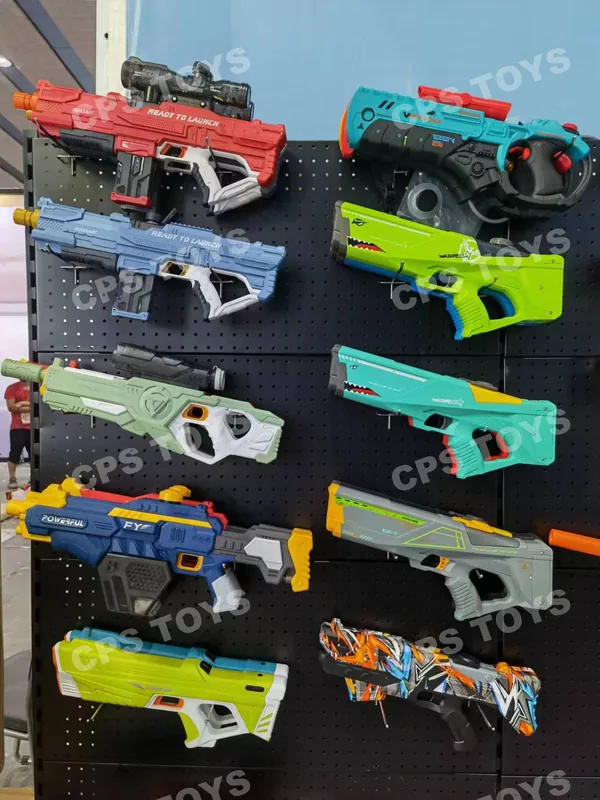
| Specialty | Plastic injection, electronic, plush, educational, die-cast |
| MOQ (OEM) | 3,000–5,000 units per SKU; 500–1,000 for simple stock ODM |
| Best Fit | Custom programs with multi-material assembly, tight mold timelines, complex packaging. For educational assortments, a supplier like Kidumio can bridge lower-MOQ needs with pre-developed ODM lines. |
| Manufacturer | Typical Delhi/Mumbai OEM Factory |
| Specialty | Wooden toys, basic plastic toys, board games, simple plush |
| MOQ (OEM) | Often negotiable below 2,000; mold amortization may raise unit cost |
| Best Fit | Simpler designs, domestic India market, buyers piloting a secondary source |
Specialties & Selection Criteria: What Each Country Actually Delivers
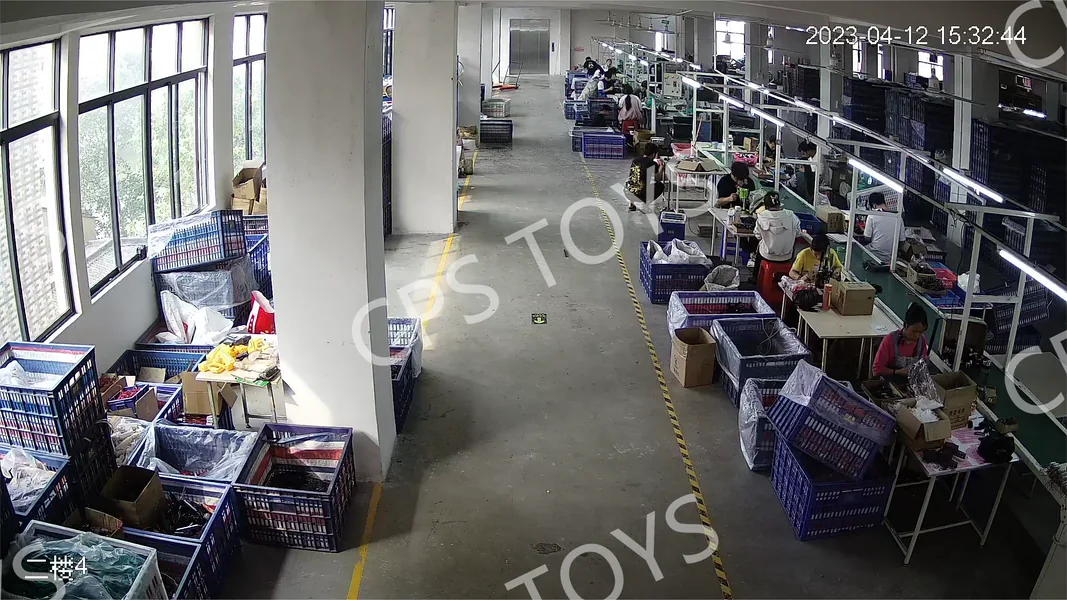
China's core OEM advantage is mold velocity. In Chenghai, a standard injection mold for a new action figure or educational puzzle piece can be cut, tested, and producing T1 samples in 25–40 days. India's mold-making shops, concentrated around Delhi and Pune, are improving but routinely quote 60–90 days for comparable complexity—and the precision on multi-cavity hot-runner tools still lags. For importers launching a seasonal line with a hard shelf date, that 30-day gap is the entire decision.
Material ecosystems tell the same story. A Chenghai factory draws ABS, PP, silicone, and electronic components from a radius of 50 kilometers, often with next-day delivery. India's toy-grade plastic resin supply is still import-dependent for certain grades, adding 2–3 weeks of buffer that a domestic Chinese factory never thinks about. Wooden toys are the exception where India holds a genuine edge: locally harvested hardwoods and a craft tradition make Delhi's wooden toy cluster genuinely competitive on quality and cost for simpler designs.
Certification readiness separates the two markets even more sharply. A mid-tier Chenghai educational toy supplier will typically hold EN71, ASTM F963, and often ISO 8124 documentation, with staff who can discuss phthalate limits in the first call. Indian factories serving export markets are rapidly catching up—many Delhi exhibitors at the 2026 Expo displayed BIS and CE marks—but the density of labs, the speed of third-party testing, and the institutional knowledge of what a Target or Walmart audit requires remain far deeper in Guangdong. If your product needs FDA food-contact silicone or REACH compliance on a tight timeline, you are still looking at China.
Your selection criteria should be brutally simple: if your product involves electronics, precise mechanisms, or complex multi-material assembly, start in Chenghai. If it is a simple wooden puzzle or a basic plush and your lead time is forgiving, evaluate India. Never choose based on patriotism or trend—choose based on where the mold maker lives.
China's Toy Bases: Why Chenghai, Shantou Still Dominates
Chenghai is not a city with toy factories—it is a toy factory that happens to be a city. Over 10,000 manufacturers and component suppliers sit in a single district of Shantou, Guangdong, forming the densest toy supply chain on earth. A plush toy's fabric, stuffing, embroidery, and packaging can be sourced without a single shipment leaving a 15-kilometer radius. This vertical density is what lets a Chenghai factory turn a napkin sketch into a finished sample in weeks, not months.
Yiwu, by contrast, is a trading hub, not a manufacturing cluster. Its strength is finished-goods aggregation and shockingly low MOQs on stock items—ideal for dollar-store buyers and Amazon resellers testing a category. But for OEM, Yiwu is a middleman; the mold still gets cut in Chenghai or Dongguan. Importers who try to run an ODM program through a Yiwu trading company often learn this after two rounds of delayed samples.
India's emerging hubs—Delhi/Noida for wooden and basic plastic, Mumbai for board games—are building genuine clusters. Government production-linked incentive schemes are attracting investment, and the 2026 Expo showed a noticeable upgrade in booth quality from just two years ago. But the ecosystem is still fragmented: a wooden toy maker in Delhi may source its paint from one state, its packaging from another, and its safety testing from a single lab in Mumbai. Until that network compresses into something resembling Chenghai's density, India remains a specialist play, not a universal alternative.
Sourcing Method Comparison: Direct Factory vs. Aggregator vs. India Pilot
| Method | Direct Chenghai Factory |
|---|---|
| Advantages | Fastest mold turnaround, deepest OEM capability, mature compliance docs, cost advantage on complex items |
| Risks | Requires vetting; MOQs can be higher for true custom; language/communication gap if no in-house English team |
| Method | Yiwu/Shenzhen Trading Company |
| Advantages | Low MOQ on stock items, English-friendly, can mix SKUs across factories |
| Risks | No real OEM control; margin markup; slow sample iteration when mold is subcontracted |
| Method | India Factory Pilot |
| Advantages | Growing government support, competitive labor for wooden/board games, potential tariff advantages depending on destination |
| Risks | Longer mold lead times, fewer export-certified labs, supply chain still maturing for complex materials |
How to Choose the Right Channel: A Product-First Framework
Start with your bill of materials, not the country. List every component: plastic type, electronic PCB, fabric, paint, packaging. If your list includes more than two materials and one of them is electronic, the decision is already made—you need Chenghai's integrated supply base. An Indian factory will likely subcontract the electronics to a separate vendor, adding coordination risk and lead time that a single Chenghai campus absorbs internally.
Evaluate your MOQ reality honestly. If you genuinely need 500 units with full custom packaging, a direct Chenghai factory may push back or price the mold amortization high; that is where a specialized supplier with curated ODM lines—like an educational toy partner that pre-develops SKUs for classroom channels—can bridge the gap without dropping you into a trading-company loop. India, conversely, may accept lower MOQs more willingly, but you will pay in longer lead time and higher unit cost on anything beyond simple construction.
Audit certifications before you audit the factory. Ask for a valid ASTM F963 or EN71 certificate with the factory's name on it, not a trading company's. Chinese factories that export to North America and Europe typically have these on file and can provide lab reports from TÜV, SGS, or Intertek within 48 hours. Indian factories are building this documentation rapidly, but verify that the lab is ILAC-accredited and that the test covers your specific material and age grade—not a generic sample. A factory that hesitates on this is not ready for your market, regardless of which country it sits in.
Finally, run a parallel sample. If you are genuinely torn, send the same spec sheet to one vetted Chenghai factory and one vetted Delhi factory. Compare not just the unit price, but the sample turnaround time, the quality of the communication, the completeness of the compliance package, and the factory's willingness to suggest cost-down engineering changes. That exercise will tell you more than any article. The factories that win these shootouts are the ones that treat the first sample not as a transaction but as the start of a five-year SKU relationship.
FAQ: China vs. India Toy Sourcing
Is India replacing China for toy OEM in 2026?
India is growing fast as a secondary source for wooden toys, basic plastics, and board games, but China's mold speed, material ecosystem, and certification density remain unmatched for complex or electronic OEM programs. India supplements China; it does not replace it.
What MOQ difference should I expect between a Chenghai factory and an Indian factory?
Chenghai OEM MOQs typically start around 3,000–5,000 units per SKU for custom molds. Indian factories may accept 1,000–2,000 units more readily, but unit costs often rise because mold amortization is spread over fewer pieces.
Which country is better for wooden educational toys?
India holds a genuine advantage for simpler wooden designs. Delhi's wooden toy cluster offers competitive craftsmanship and cost. For complex or mixed-material educational toys with electronics, Chenghai still leads.
How can I verify safety certifications from a new Indian supplier?
Request a certificate with the factory's name, not a trading company's, and confirm the testing lab is ILAC-accredited. Cross-check that the test report covers your specific material and target age grade—generic certificates are a red flag in any country.
Should I split my sourcing between China and India?
Only if your product line has clear material divides—wooden items from India, complex plastic or electronic items from China. Running the same category in two countries doubles your audit, compliance, and logistics overhead with limited benefit for most importers.
Request a Quote
If you are sourcing educational toys, sensory learning products, or classroom-ready assortments and want a Chenghai partner who can provide clear SKU data, OEM packaging, and destination-market compliance support, reach out to Kidumio for a spec-driven conversation.
Source this range with Kidumio
Kidumio is the wholesale brand of Kidumio Educational Toys in Chenghai, Shantou. Send your product list, target market, quantity and packaging needs for FOB / EXW pricing, samples, certificates and OEM/ODM options.
Ready to source fidget and stress toys?
Browse the wholesale catalog or send an inquiry with your target category and quantity.
View all products Request a Quote