
Private Label Sensory Toys: Check Classroom Supplier Fit
Use a two-product worksheet to check classroom use, age, sharing, samples, QC and replenishment before releasing a private-label toy brief.
For US/EU school-supply importers using a catalog-to-private-label sourcing route, clear the flash-card word-practice and touch-piano classroom-use checks before releasing a supplier brief. A private label sensory toys brief should specify the intended age, skill activity, active users per device and destination market—not just a logo and box. Proceed to a bounded development brief when the supplier can address those requirements against identifiable samples; hold production approval until construction, market documentation and commercial terms are accepted.
Use the two-product worksheet below as a Kidumio purchasing tool. It separates recorded catalog details from the responses and records a buyer should obtain, without treating a category label as proof of classroom suitability.
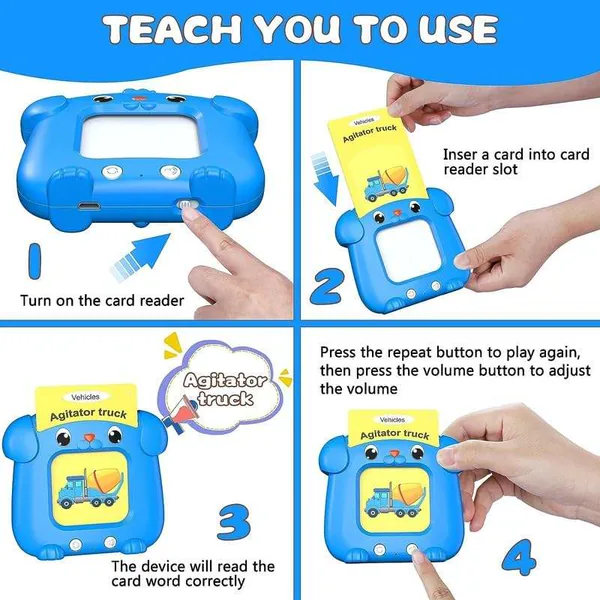
What do the flash-card set and touch piano actually contribute to the classroom assortment?
| Product format and contents | Cat Educational Flash Cards: 112 cards and 224 sight words. Rainbow Touch Piano: touch-piano format with microphone. |
|---|---|
| Mechanism to demonstrate | Flash-card set: ask the supplier to demonstrate how a card is handled and used for word practice, including any powered functions. Touch piano: demonstrate touch activation, sound output and microphone operation on the proposed sample. |
| Recorded material | Both entries list ABS. Request a component-level material description; this field alone does not establish the material of every card, accessory or internal component. |
| Power information | Flash-card set: a 3.7V battery is recorded as included. Confirm its chemistry, charging arrangement and supplied accessories. For the piano, request the proposed power configuration and identify what is included in the quoted pack. |
| Recorded retail packing | Both entries indicate color-box packing. Approve the actual box construction, contents list, instructions and artwork separately. |
| Reference minimum order quantity | Flash-card set: 60 units. Touch piano: 32 units. Obtain a dated quotation confirming the minimum for the requested branding and packaging configuration. |
| Recorded units per carton | Flash-card set: 60 units. Touch piano: 16 units. Carton quantities describe packing; they do not establish an order multiple or a full-carton purchasing restriction. |
What age, skill activity and sharing arrangement should the brief specify?
Specify age, the intended classroom activity and simultaneous active users separately for each product; card count and accessory count are not measures of classroom capacity.
For the flash-card set, define whether the activity is teacher-led word recognition or independent practice, then check the proposed word list, language, card handling and reset procedure against that use. The 224 sight words are a content count—not evidence of a particular reading level.
For the piano, decide whether audible play belongs in the intended learning station. Observe whether children can activate the intended controls, whether the microphone is needed for the activity and how an adult stops or resets operation. A touch-piano label does not establish suitability for a quiet desk program.
As a proposed evaluation arrangement, start with one active user per device and turn-taking. Ask the supplier to demonstrate any larger sharing arrangement before writing it into the brief. Specify the number of devices per classroom independently of the number of cards in a set.
If fine-motor practice is an assortment requirement, name the action you want to observe—such as positioning a card or targeting a touch control. Accept the sample for that activity only after observing it; do not substitute a broad sensory or educational label for the task.
What should the supplier return, and what response is acceptable?
| Classroom activity, age and sharing | Request: return the proposed age grade, instructions, warnings and a demonstration of the buyer's intended activity. Capture: proposed users per device, adult assistance and differences from the requested use. Accept: an identifiable sample and written response that address the specified activity and sharing arrangement, with age evidence reviewed by the buyer's designated reviewer. Decision: proceed for the accepted use; revise or hold any conflicting classroom claim. |
|---|---|
| Exact sample and assortment contents | Request: supply a sample tied to a model description, revision and contents list. Capture: flash-card count and word-list version; piano and microphone configuration; included power accessories. Accept: sample contents match the agreed list, and discrepancies are recorded and resolved. Decision: approve the demonstrated configuration only; return substitutions for review. |
| Private-label changes and packaging | Request: mark which changes affect only artwork and which alter the toy, content, sound functions or accessories. Capture: supported logo locations, packaging dieline, artwork file requirements, instruction-language options and proofing stages. Accept: an annotated change list and packaging proof tied to the sample revision. Decision: release artwork work within the accepted scope; reassess construction or functional changes before approval. |
| Destination-market review | Request: return the exact product description, intended age, warnings, relevant test reports and destination documentation for the proposed construction. Capture: the model and revision covered by each document and any differences from the sample. Accept: the designated market reviewer can trace the documents to the proposed item and assess their applicable coverage. Decision: keep production approval on hold until consequential mismatches are resolved. |
| Classroom QC and inspection access | Request: propose checks for card completeness and handling, touch activation, microphone function, supplied accessories and pack completeness, as applicable. Capture: inspection stage, responsible party, access arrangements and corrective-action process. Accept: an agreed inspection plan tied to the approved sample, plus compatible care instructions for the intended classroom routine. Decision: proceed only when the buyer can verify the agreed checks; commercial inspection does not replace safety testing. |
| Current order and replenishment terms | Request: quote the exact branded configuration, initial quantity and expected repeat-order quantity. Capture: price, currency, quote validity, minimum quantity, sample and production schedules, delivery basis, repeat-order terms and change-notification arrangements. Accept: a dated quote and written confirmation of the proposed schedule and repeat specification. Decision: approve commercial planning against those terms, not catalog reference quantities or an assumed stock position. |
| Communication and supply-chain responsibility | Request: name the commercial contact and the parties responsible for production, packaging, inspection and corrective action. Capture: answers against each worksheet line, promised response dates and unresolved items. Accept: a coherent response with named owners and agreed follow-up dates. Decision: use missed dates to assess coordination readiness; do not treat a slow reply as proof of fraud or future behavior after payment. |
What battery, material and certificate checks belong in this scope review?
Request battery-access, electrical-protection and material records for the actual proposed construction, rather than accepting ABS or battery voltage as a safety conclusion.
For the flash-card set, ask how the included battery is retained, how charging is controlled and which report sections address the proposed electrical configuration. For the piano, establish the power source first, then review the relevant battery compartment, connections and accessories. Do not assume either product uses button cells.
A relevant external example is the CPSC's February 26, 2026 recall of children's flashcard talking toys, which reported excessive lead and phthalate content and failure of short-circuit protection. Those findings concern the named recalled products only; no connection to these two catalog items or their suppliers is established. The purchasing lesson is to review material content and electrical protection as separate questions. CPSC flashcard recall
For US purchases, CPSC guidance says a Children's Product Certificate must identify the covered product sufficiently to match it to that product. Ask for a traceable match between the certificate description, proposed sample and supporting reports; a generic category description does not establish coverage of every model. CPSC certificate guidance
For EU and other destinations, request a separate market-specific review rather than treating US documentation as interchangeable. Report coverage follows the tested construction and applicable rules—not a blanket assumption that every internal stock code or every shipment needs a new test.
When should the buyer proceed, request clarification or hold the brief?
Proceed with a bounded development brief when the product activity, supplier responsibilities and next approval steps are clear; request clarification for defined gaps, and hold when unresolved conditions could change the selected toy or its intended classroom use.
A packaging-file question can remain an assigned development action. A sample that cannot perform the required classroom activity calls for a product decision before artwork work continues. Evaluate manufacturers and trading companies against the same evidence and inspection access; business type alone does not establish stronger or weaker QC.
Use the following handoff record for each product. Approval of a development brief is not authorization to manufacture or ship.
| Identity and revision | Record the buyer's product reference, supplier model description, sample identifier, brief revision, artwork revision and destination market. Attach the catalog reference and supplier confirmation without treating them as the same approval. |
|---|---|
| Specified target versus observation | Record the requested age group, classroom activity, active users, contents and private-label changes alongside the supplier's response and sample observations. Identify each accepted difference explicitly. |
| Decision and conditions | Select proceed, request clarification or hold. State the work authorized, the work excluded and each condition that must close before the next approval gate. |
| Responsible approver and date | Name the purchasing approver and approval date, together with the people responsible for educational-use review, destination-market review and QC acceptance. |
| Follow-up closure | Assign each condition an owner and due date. Close it with the revised sample, response, proof or document reference, then record who accepted the closure and when. Reopen approval when a proposed change affects the accepted configuration. |