
Avoiding Choking Hazards: Safety Certifications for OEM Children's Toys
How B2B toy buyers can avoid choking hazards with EN71, ASTM F963, and CPC testing. Covers OEM safety protocols, factory audits, and cert verification in China.
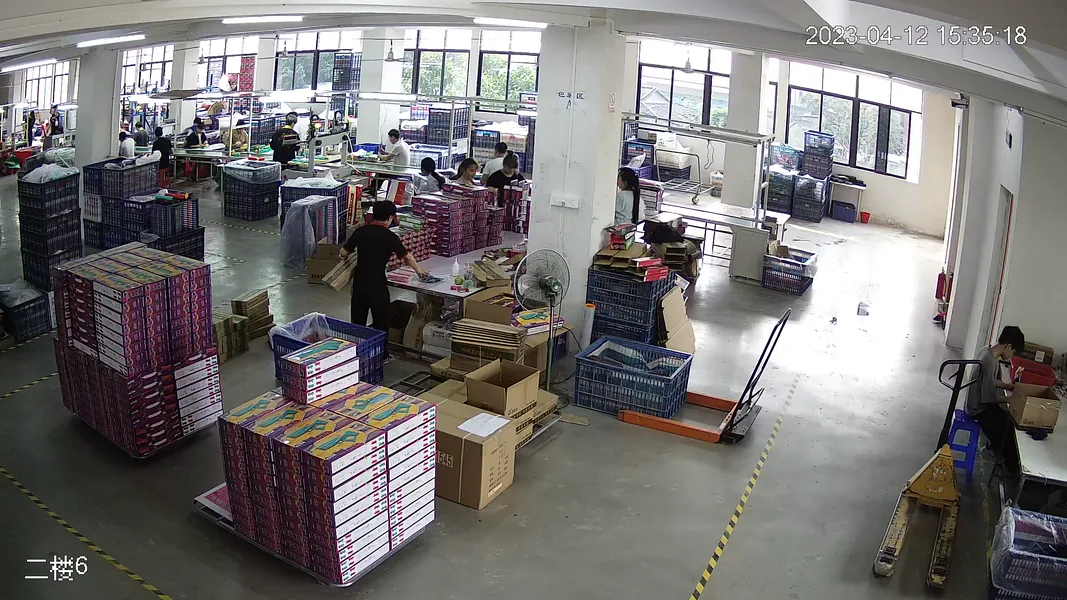
A glossy EN71 certificate on a Chenghai showroom wall does not mean your container of 20,000 units is safe. That certificate documents one sample on one day. The plastic eye that detaches from a plush dinosaur during a random CPSIA pull test at a US warehouse was never part of that sample. This page maps the exact testing chain an OEM children's toy factory must follow to keep choking hazards out of your inventory: material selection, small-parts cylinder verification, batch-level ASTM F963 mechanical testing, and the CPC documentation US Customs actually checks.
Key Takeaways
- The wall certificate myth: A single EN71 or ASTM certificate on a factory wall does not cover your production run. Real compliance requires batch-level testing, traceable to your specific PO.
- Small parts ≠ just size: Choking hazards come from magnets, button batteries, detachable eyes, and accessible stuffing. A small-parts cylinder test is the minimum—pull-torque and drop tests matter equally.
- CPC is your entry ticket: For US imports, a Children's Product Certificate (CPC) backed by a CPSC-accepted lab report is mandatory. Without it, your shipment can be seized at the port.
- Chenghai factories vary widely: Shantou/Chenghai is the global toy capital, but compliance culture differs enormously between factories. An on-site audit checking the in-house testing lab is the only reliable filter.
- Age grading drives everything: A product graded 3+ with a 'small parts' warning avoids choking-hazard testing to a different standard than a 0-3 product. Get the grading wrong, and your entire shipment fails.
The Cat & Jack Recall: Why Detachable Parts Are the Real Enemy
In mid-2026, Target recalled thousands of Cat & Jack infant sandals because pearl decorations could detach. The pearls were small enough to fit entirely inside a small-parts cylinder. This is the exact failure mode that assembly-line QC must catch: any component a child can remove with reasonable torque—teeth, fingers, or gravity—is a potential recall. For OEM buyers, the lesson applies to every product combining a hard component with a soft substrate: plush toys with plastic eyes, wooden puzzles with glued knobs, sensory boards with attached beads. The bond is only as strong as the weakest production batch.
A responsible factory runs a pull test on every new batch of plastic eyes before assembly. The specification: 90 Newtons for 10 seconds, no separation. If a supplier cannot state their pull-test threshold in Newtons, they are not testing—they are hoping.
The Testing Chain: From Raw Material to Container
A responsible OEM factory does not test once. It tests at four choke points.
First, incoming materials. Plastic pellets, paint, fabric, and small components arrive with supplier MSDS and third-party heavy-metal reports. Any batch without a traceable lab report dated within 12 months gets rejected. Second, in-process. On the assembly line, QC staff check seam strength, eye attachment, and small-parts security every two hours. Third, pre-shipment. Samples are pulled per ANSI/ASQ Z1.4 (AQL 2.5 for major defects, 0 for critical safety defects) and sent to an ISO 17025-accredited lab—typically SGS, TÜV, or Intertek—for the full mechanical and chemical suite. Fourth, documentation. The lab report, CPC, and tracking label are packaged and emailed to the buyer before the container leaves Shantou port.
If a factory claims they 'test in-house' with no third-party lab relationship, walk away. In-house testing is a supplement, not a substitute.
EN71 vs ASTM F963: What Buyers Actually Need to Know
Both standards cover mechanical hazards, flammability, and chemical migration, but they are not interchangeable. EN71 (EU) uses a slightly different small-parts cylinder diameter and different heavy-metal limits. ASTM F963 (US) adds specific requirements for sound-producing toys, magnets, and cord length that EN71 does not cover identically. For a toy shipping to both markets, you need both reports—or a harmonized test protocol that covers the stricter requirement for each clause.
The choking-hazard clause (EN71-1 clause 5.1 / ASTM F963 section 4.6) is where most failures happen. The test is deceptively simple: place the toy or any detached component in a cylinder with a 31.7 mm opening. If it fits entirely without compression, it fails for children under 3 years. But the standard also requires a use-and-abuse pre-conditioning: drop, torque, tension, and compression tests before the cylinder. A toy that survives the cylinder fresh out of the box may fail after a 90-cm drop onto concrete. Always ask your factory: 'Show me the pre-conditioning photos from the last batch test.'
How to Verify a Factory's Safety Culture in Chenghai
Chenghai district in Shantou, Guangdong, produces over 70% of the world's plastic toys. The supply-chain density is unmatched: a doll factory and an eye-injection workshop may be on the same street. This is an advantage for speed and cost, but it also means that a factory's safety posture depends entirely on management, not geography.
When you audit a Chenghai factory, spend 20 minutes in the in-house lab. Look for: a calibrated small-parts cylinder (not a homemade PVC pipe), a torque tester with a digital readout, and a record book with actual batch numbers and dates—not a clean notebook with identical handwriting. Ask the lab technician: 'What was the last failure you caught?' If they say 'never,' either they are not testing or they are lying. A healthy safety culture catches failures before they ship.
A factory with genuine quality controls keeps its small-parts test log visible on the QC wall. A typical month might record three rejections: one batch of sensory beads with inconsistent diameter, one plush seam that opened at 68N instead of 90N, and one wooden puzzle knob that splintered during the drop test. Each rejection has a corrective action report attached. This is the paperwork you want to see—not a clean record.
Manufacturers at a Glance
| Kidumio (Shantou) | Specialty: Educational, sensory, classroom-ready toys. MOQ: 500–2,000 units depending on SKU. Origin: Chenghai, Shantou. OEM/ODM: Full OEM/ODM with in-house design. Certifications: EN71, ASTM F963, CPC per batch. |
|---|---|
| Regional plastic toy specialist (Chenghai) | Specialty: Injection-molded action figures, vehicles, building blocks. MOQ: 3,000–10,000 units. Origin: Chenghai, Shantou. OEM/ODM: OEM with customer molds. Certifications: EN71, ASTM F963, ISO 9001. |
| Regional plush toy specialist (Shantou) | Specialty: Stuffed animals, plush keychains, custom mascots. MOQ: 500–2,000 units. Origin: Shantou. OEM/ODM: OEM with customer patterns. Certifications: EN71-1/-2/-3, ASTM F963, CE. |
| Regional educational toy specialist (Chenghai) | Specialty: STEM kits, magnetic tiles, science experiment sets. MOQ: 1,000–5,000 units. Origin: Chenghai, Shantou. OEM/ODM: ODM with customization options. Certifications: EN71, ASTM F963, FCC (for electronic kits). |
| Regional wooden toy specialist (Yiwu) | Specialty: Wooden puzzles, blocks, threading toys. MOQ: 500–1,500 units. Origin: Yiwu, Zhejiang. OEM/ODM: OEM with custom laser engraving. Certifications: EN71-3 (migration), ASTM F963, FSC on request. |
By Category: What to Ask Each Type of Factory
| Plastic toys (injection-molded) | Ask for the mold-flow analysis that proves no sharp edges or small-part breakage points. Verify the plastic resin is virgin, food-grade if applicable, and phthalate-free with a batch-level RoHS/REACH report. The choking risk here is small components snapping off—demand a drop-test video from 1.3m onto tile. |
|---|---|
| Plush toys | The seam is your enemy. Ask for the seam tensile strength specification (minimum 70N for 0-3 years, often higher for OEM specs). Check that eyes and noses are either embroidered or secured with a mechanical locking washer, never glued. Stuffing must be clean, non-allergenic, and free of small hard contaminants. |
| Educational and sensory toys | These often mix materials—wood, fabric, plastic beads, metal bells. Each material junction is a failure point. Ask: 'Do you test each sub-component individually before assembly?' For sensory beads, the internal diameter tolerance matters; a 31.5mm bead that passes today may shrink slightly in a cold container and fail tomorrow. |
| Wooden toys | Splintering is a choking and laceration hazard. Ask for the surface-finish report: smooth, no burrs, non-toxic water-based paint only. Glued components (knobs, wheels) must pass a torque test of 0.45 Nm. Ask for the glue's formaldehyde-free certification. |
FAQ
Do I need both EN71 and ASTM if I only sell in the US?
No. For US-only sales, ASTM F963 with a CPC is sufficient. But if your factory also produces for EU buyers, their testing infrastructure likely covers both—request the full EN71 report anyway as a quality signal.
How often should batch testing be done?
At minimum, once per production batch per SKU. If your PO spans multiple production runs or material lots, each lot requires separate testing. For high-risk products (0-3 years, many small components), consider AQL-based pre-shipment inspection plus lab testing.
Can I use the factory's own lab report for my CPC?
Only if that lab is CPSC-accepted (ISO 17025 accredited and on the CPSC-accepted lab list). Most in-house factory labs are not. You need a third-party report from SGS, TÜV, Intertek, or equivalent.
What is the most common choking hazard in educational toys?
Detachable magnets and small loose beads in counting or sorting sets. Magnets are doubly dangerous—choking plus internal tissue damage if swallowed in multiples. Any magnet set must pass the ASTM F963 small-magnet ingestion test.
How do I verify a factory's safety certifications are current?
Request the full PDF report, not just the cover page. Check three things: the report date (within 12 months), the lab's CPSC accreditation status (search the CPSC lab list online), and that the product description on the report matches your exact SKU—not a 'representative sample.'
What labeling prevents a choking-hazard recall?
For products with small parts intended for children 3+, a clear 'Choking Hazard - Small Parts. Not for children under 3 years' warning on packaging and listing is legally required in the US. But labeling does not replace testing—a genuinely hazardous product with a warning is still subject to recall.
Request a Quote
Kidumio files a batch-specific EN71 and ASTM F963 report for every OEM educational toy order shipped from Shantou—no wall certificates, no assumptions. If you need a factory that treats safety documentation as standard output, not an upsell, send us your brief and we'll return a compliance timeline with the quote.