
2026 Toy Safety Recalls: How to Source EN71/ASTM Compliant Products from China
2026 recalls show why EN71/ASTM compliance is non-negotiable. Learn how to audit Chinese factories, verify CPC docs, and source safe toys with actionable vetting steps.
A supplier who cannot show you a failed internal batch test report is hiding their real quality control process. The 2026 wave of toy safety recalls—choking hazards in magnetic building sets, burn risks from overheating battery compartments, and asbestos contamination in craft clays—has turned importer due diligence from a checkbox exercise into a survival skill. This page gives you a repeatable, four-step process to source EN71, ASTM F963, and CPC-compliant educational toys from Chinese manufacturers, from reading a test report like an auditor to structuring a purchase order so liability stays where it belongs.
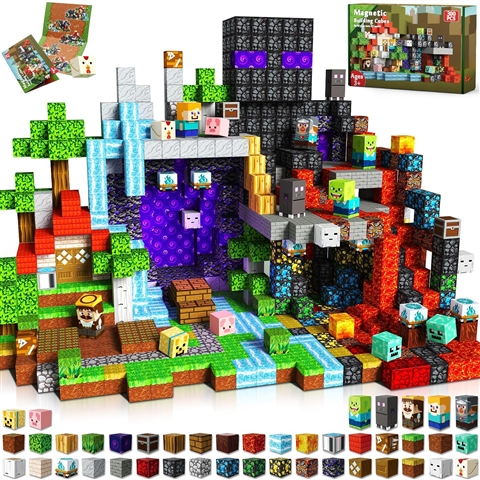

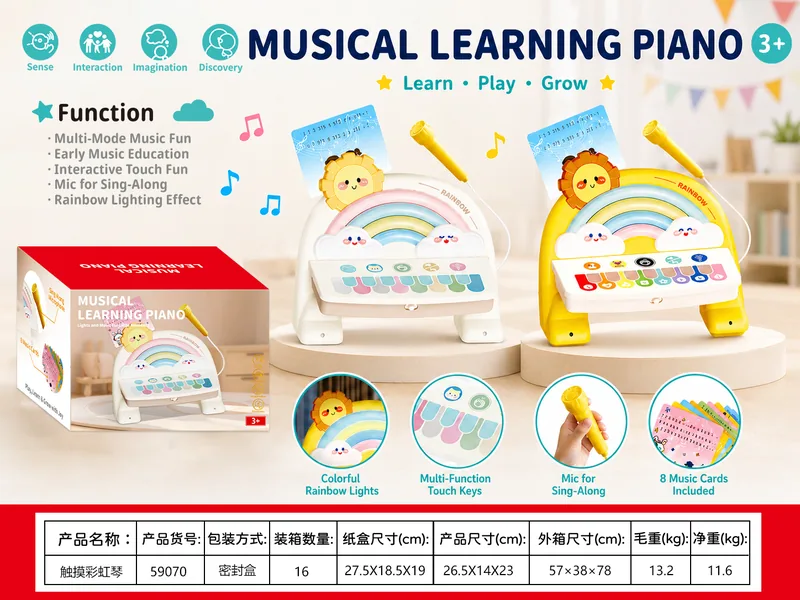
What & Why: The 2026 Recall Landscape
In the first half of 2026, US CPSC and EU Safety Gate issued more than 30 serious toy recalls originating from Chinese supply chains—a 20% jump over the same period last year. The problem was not a lack of certificates. The factories had paperwork. The problem was certificate shopping, where a supplier sends one golden sample to an ISO 17025 lab for a pass certificate, then fills the container with units made from cheaper, untested materials.
Choking hazards remain the number one recall driver, especially in products with small detachable magnets, button batteries without secure compartments, or plastic parts that snap off under torque below the ASTM F963 threshold. But the asbestos incidents in 2026 changed buyer behavior. Multiple shipments of modeling clay and sand kits contained trace asbestos fibers from talc filler sourced at the lowest bid. No importer wants to explain to a retailer why their SKU made the evening news.
This environment rewards a specific skillset: knowing what to ask a factory before you place a PO, and recognizing the four or five document red flags that separate a genuinely compliant production line from a paper-only operation.
Benefits of Buying EN71/ASTM-Compliant Wholesale
The obvious benefit is staying out of court and off CPSC's public recall list—but there is a commercial upside. Retailers are terrified of recalls and preferentially stock products from importers who can prove systematic compliance.
A shipment backed by a valid Children's Product Certificate (CPC), batch-specific EN71 Part 1-3 reports, and phthalate/PAH test data from a CPSC-accepted lab commands a premium over an undocumented quote from an unaudited trading company. Compliance-documented STEM toys consistently achieve higher wholesale margins than functionally identical products sold without traceable batch testing.
The second benefit is supply chain stability. A factory that cuts corners on materials to hit a price also cuts corners on production scheduling, mold maintenance, and packaging fill rates. A supplier that invests in quarterly EN71 surveillance testing and keeps an AQL 2.5 inspection record is the same supplier that ships on time and replaces defective units without arguing.
Step-by-Step: How to Source Compliant Toys From China in 2026
Below is a four-step sourcing workflow refined from hundreds of importer audits. Each step contains the specific document, question, or clause that separates a supplier worth visiting from one worth skipping.
Step 1: Pre-Screen Suppliers on Compliance Posture, Not Just Price
Before you ask for a quotation, ask for a recent EN71 or ASTM F963 test report—and read the bottom half. A real report lists the exact material formulations tested, the lab's A2LA or equivalent accreditation number, and a photo of the test sample. If the supplier sends you a one-page 'certificate' without a test report number you can verify on the lab's website, move on.
The second pre-screen question: 'When was your last failed test, and what did you change?' A factory that has never failed an internal batch test is either not testing, or lying. The toy industry runs on continuous material substitution—a plasticizer supplier changes their formula without telling anyone; a pigment batch drifts on heavy metals. Good factories catch these drifts in pre-production testing and fix them before the container is packed. Ask to see a corrective action report (CAR) from a failed in-house screening. If they cannot produce one, move on.
Also check whether the supplier holds a BSCI or SEDEX social compliance audit, or at minimum a valid ISO 9001 certificate that covers their toy production scope. A supplier without any third-party factory audit in the last 12 months is an unnecessary risk in 2026.
Step 2: Verify the CPC and Supporting Test Data
For any children's product entering the US, the Children's Product Certificate (CPC) is your legal shield. But a CPC is only as good as the third-party test reports it references. Your job as the importer is to trace every claim on the CPC back to a specific lab report.
Key checks: (1) The testing lab must be CPSC-accepted—search the lab name on the CPSC website. (2) The report date must be within the last 12 months unless materials and production process are unchanged (and documented as unchanged). (3) The test sample description must match your exact SKU, not a 'similar product.' (4) For EN71 compliance into Europe, verify the report covers all three parts: mechanical/physical (Part 1), flammability (Part 2), and migration of certain elements (Part 3). If it only shows Part 1, you are holding an incomplete safety case.
One 2026 asbestos recall happened because an importer accepted a CPC that referenced a phthalate test from two years ago and a heavy metals test from a different SKU. The gaps were visible in the paperwork—if anyone had bothered to cross-check the dates and product descriptions.
Step 3: Structure the PO to Enforce Pre-Shipment Inspection
A good purchase order does more than state price and delivery date. It defines the compliance gate that the shipment must pass before you release the balance payment.
Your PO should include: (a) The exact safety standards the product must meet (EN71 Parts 1-3, ASTM F963-23, CPSIA section 101 for lead, etc.), not just 'meet US/EU standards.' (b) The requirement for a pre-shipment inspection by an independent third party (SGS, Bureau Veritas, Intertek) at AQL 2.5 or tighter, with the inspection scope explicitly including a torque/tension test for small parts, a drop test, and a magnet flux test if applicable. (c) A clause stating that if the inspection fails, the supplier bears the cost of re-inspection and any delay penalties.
Many importers skip pre-shipment inspection on reorders because 'nothing changed.' Something always changes: a new mold cavity, a substitute screw supplier, a seasonal rush that makes operators careless with glue application. The recall data from Q1 2026 shows that reorder shipments fail at nearly the same rate as first orders when no inspection is performed.
Step 4: Run a Factory Visit Focused on Material Traceability
If you visit the factory—and you should for any order above $15,000—spend less time in the showroom and more time in the raw material warehouse. Look for three things: segregated zones for compliant versus non-compliant materials (if they supply different markets), clear batch labels that trace each resin sack or paint drum back to a supplier lot number, and a locked quarantine area for materials awaiting lab clearance.
Ask to see the incoming material inspection log. A factory that records supplier name, batch number, date received, and test result for every delivery of ABS resin, PVC compound, or paint is running a real compliance system. A factory that says 'our materials supplier gives us a certificate so we don't need to test' is running on trust—and trust does not survive a CPSC investigation.
During the production line walk, check whether workers are using the same material you saw in the quarantine area. Factories have been known to show buyers the compliant resin in the warehouse but run a cheaper, non-certified batch on the machines. One quick check: ask to see a production batch ticket from a machine currently molding your product. It should match the warehouse batch you inspected.
Sourcing Step Checklist: What to Check vs. Red Flag
| Step 1: Pre-screen compliance posture | Check: Full test report with lab accreditation number, traceable sample photo. Red flag: One-page 'certificate' without verifiable report number. |
|---|---|
| Step 1b: Failed test history | Check: Corrective action report from an internal batch failure. Red flag: 'We've never failed a test.' |
| Step 2: CPC verification | Check: CPC references current (≤12 months) CPSC-accepted lab reports matching exact SKU. Red flag: CPC references old tests or different product descriptions. |
| Step 2b: EN71 completeness | Check: Report covers EN71 Parts 1, 2, and 3. Red flag: Only Part 1 (mechanical) provided. |
| Step 3: PO compliance clause | Check: Exact standard codes, independent third-party AQL inspection required, supplier bears re-inspection cost. Red flag: PO states only 'meets US/EU standards' with no inspection gate. |
| Step 4: Factory material traceability | Check: Segregated compliant/non-compliant zones, batch labels, incoming material test log. Red flag: No material quarantine area or batch records. |
| Step 4b: Production batch ticket match | Check: Machine batch ticket matches warehouse batch inspected. Red flag: 'The material is the same, don't worry.' |
What to Ask Suppliers Before You Place a PO
Send this RFQ checklist to shortlisted suppliers and compare their responses side by side. A supplier that answers every question with specific documents within 48 hours is operating at a different level from one that stalls or sends generic brochures.
1. Provide your most recent EN71 Part 1-3 or ASTM F963 full test report with lab accreditation number and sample photo—not a summary certificate.
2. Provide your last failed internal batch test report and the corrective action taken.
3. Confirm your CPC references current (within 12 months) CPSC-accepted lab tests for this exact SKU.
4. Describe your incoming material inspection process—do you quarantine raw materials and test each batch before production release?
5. What is your policy on independent pre-shipment inspection? Do you accept SGS/BV/Intertek at AQL 2.5? Who pays for re-inspection if the first inspection fails?
6. Provide a copy of your most recent factory social compliance audit (BSCI, SEDEX, or equivalent) or ISO 9001 certificate covering toy production scope.
FAQ: Sourcing Compliant Toys From China
What's the difference between EN71 and ASTM F963?
EN71 is the European toy safety standard covering mechanical, flammability, and chemical risks. ASTM F963 is the US equivalent, with differences in small-part cylinder dimensions, heavy metal limits, and magnet requirements. A product sold in both markets typically needs testing to both standards.
Do I need a CPC if my product is only sold in Europe?
No. The Children's Product Certificate (CPC) is a US requirement under CPSIA. For Europe, you need a Declaration of Conformity referencing the EN71 test reports, plus CE marking. The documentation structure is similar, but the legal references differ.
How much does third-party EN71/ASTM testing cost?
Full EN71 Part 1-3 testing typically costs $200-400 per SKU at an ISO 17025 lab in China. ASTM F963 testing costs $300-600 depending on product complexity and material count. Costs rise if phthalates, PAHs, or specific migration testing is added.
Can a Chinese factory provide real EN71/ASTM certificates?
Yes, many factories can provide real certificates, but verification is your responsibility. Always check the lab's CPSC acceptance status for ASTM tests, verify the report number on the lab's website, and confirm the tested sample matches your product. Never accept a certificate without a traceable report.
What's the most common reason compliant toys still get recalled?
Post-certification material substitution. The factory passes testing with one material batch, then switches to a cheaper, untested substitute for mass production without re-testing. This is why batch-level incoming material testing and pre-shipment inspection are essential, not optional.
Is a factory audit necessary for small orders under $5,000?
For a $3,000 trial order, a full on-site audit may not be cost-effective. You should still demand the full test report package, verify it independently, and require a third-party pre-shipment inspection at AQL 2.5. The cost of one recall dwarfs these precautions.
Related Products & Categories
Request a Quote for Compliant Educational Toys
Sourcing EN71/ASTM-compliant toys does not have to be a paperwork nightmare if you work with a supplier that treats batch testing and material traceability as standard operating procedure. At Kidumio, our educational toy range—from ABS building sets to interactive learning electronics—ships with full EN71, ASTM F963, and CPC documentation verified by CPSC-accepted labs, and we welcome independent pre-shipment inspection at any AQL level you specify. Browse our compliant product line or send us your RFQ with the checklist above—we will respond with the actual test reports.